How to Clean Cushions (Without Ruining the Pattern)
As an Amazon Associate we earn from qualifying purchases. Some links on this page are affiliate links, which means we may earn a small commission if you make a purchase.
You’re looking at your cushions after a UK winter and the pattern has gone blurry. There’s a watermark on the armrest, a dull, flattened cast to what used to be a sharp print, and the idea of paying hundreds for new covers is suddenly very real.
The good news is there’s usually a way back. The trick is knowing which cleaning method your specific cushions can actually handle, and there’s one step almost every guide misses: testing for colourfastness before you touch them with water. Get that wrong and you don’t have dirty cushions — you have permanently blurred ones.
Here is how to clean garden furniture cushions properly, whatever fabric they’re made from, and how to keep them looking decent through next season.
Why Your Cushions Look Worse Than They Are
What makes UK garden cushions look permanently ruined isn’t usually the dirt itself — it’s moisture. A set bought for a rare heatwave and left exposed through autumn and winter accumulates something more stubborn than grime: trapped damp that encourages mould, mildew and watermarking deep in the fabric. What looks like permanent staining is often surface grime sitting on top of a moisture problem underneath.
Regular cleaning does extend the life of your cushions, but it’s not just cosmetic. Dirty outdoor cushions harbour allergens and bacteria that become a hygiene concern once you’re eating lunch off them in summer. The RHS doesn’t actually cover cushions in its furniture care advice — its guidance is aimed at frames and hard surfaces, where a once-a-year brush and soapy water routine is all it recommends. But the underlying logic transfers: algae and grime take hold on anything left dirty outdoors, fabric included, and the fix is the same discipline applied more carefully.
The honest reality for most UK homeowners is that cushions left out all winter look far worse in spring than they actually are structurally. A thorough clean can restore a surprising amount. The catch is that cleaning only works if the cushions dry completely afterwards — put damp cushions back into storage and you’ve created the ideal environment for mould to establish itself.
The Fabric Check: Do This Before You Clean Anything
This is the step that separates a successful clean from a disaster. Most UK outdoor cushion covers at mid-range price points are made from printed polyester — the pattern is applied using sublimation dye, which bonds the colour to the fibres with heat rather than traditional weaving. The result looks sharp and costs less, but there’s a catch:
When you introduce water, detergent and friction to sublimation-dyed polyester, the dye can run. You won’t see it happen immediately; it spreads through the fibres as you scrub, turning a crisp geometric print into a muddy blur that no amount of rinsing will fix. This is irreversible. The fabric isn’t damaged in the way that bleach damages it; the dye itself has redistributed, and there is no undo button.
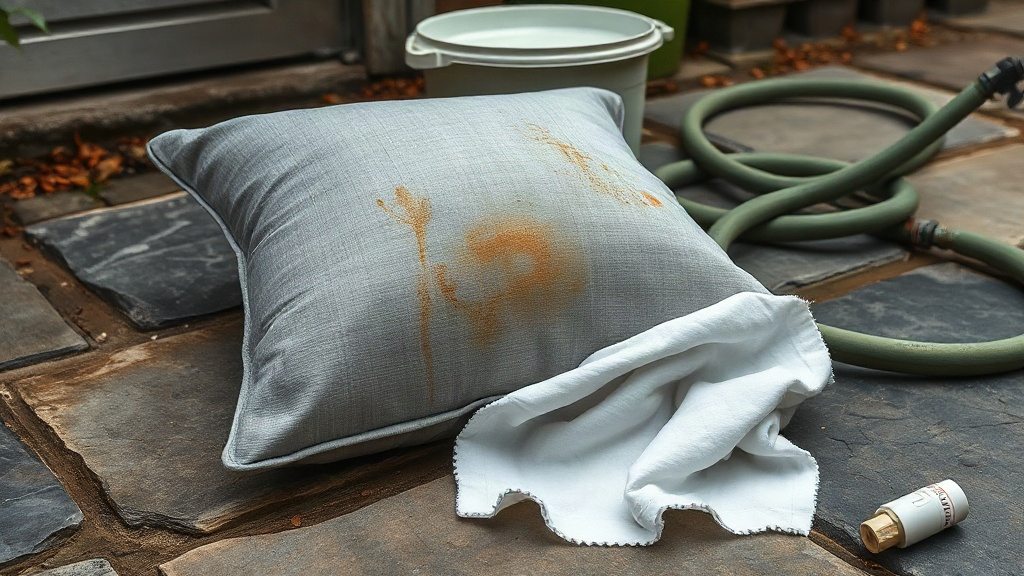
The fix is straightforward: test first. On a hidden seam or the underside of the cushion cover, dampen a white cloth and rub firmly. If the cloth picks up any colour at all — even a faint tint — the cover is not colourfast, and you must not machine wash it or soak it in water.
If the cloth stays white, you have the green light for machine washing, subject to the conditions in the next section. If it picks up colour, step away from the sink and proceed to the gentle hand-clean method instead.
This test takes thirty seconds and could save you the cost of a full set of replacement covers. It is the single most important step in the entire process — and the one almost every other cleaning guide skips.
Method 1: The Gentle Hand Clean (Safe for All Cushions)
If your cushions failed the colourfastness test — or if they’re not removable — this is your method. It’s also the right approach for any cushion you are simply maintaining rather than rescuing.
You’ll need a soft brush or a clean cloth, mild soapy water (washing-up liquid is perfectly adequate), and patience. Work the brush in gentle circular motions, focusing on high-traffic areas: the armrests, the back where shoulders rest, and anywhere that shows body contact or food spillage.
Avoid bleach or any harsh chemical cleaner. Bleach degrades fabric fibres and can cause them to deteriorate faster than leaving the cushion dirty. For most garden furniture, a soft brush, mild soapy water, and a bit of patience does the job.
Once you’ve scrubbed, the critical step is drying. Pat the cushion surface with a clean towel to absorb surface moisture, then stand the cushion upright or prop it against a wall in a well-ventilated spot. Do not press the cushion flat or stack damp cushions on top of each other. Full air-drying before storage is non-negotiable — any residual moisture will lead to mould forming inside the fabric.
Method 2: Machine Washing — The Nuclear Option
Machine washing earns its “nuclear option” label because it genuinely shifts ground-in grime that hand-cleaning can’t touch — but it only gets a green light once two boxes are ticked: the covers come off completely, and the fabric has already cleared the colourfastness test above. Skip either check and you’re gambling with a pattern that doesn’t come back.
The cover must be completely removable — do not attempt to wash a cushion with the foam insert still inside. The foam will absorb water, become heavy, and may tear or misshape in the drum. More importantly, washing the foam insert accelerates its degradation significantly. To preserve the life of your patio furniture cushions, do not wash the foam insert. Set the machine to a low cycle — 30°C is the standard recommendation from UK retailers. Use standard laundry detergent, no bleach, and no fabric conditioner.
Air dry only. Never use a tumble dryer — the heat can shrink the fabric, warp the foam pocket, or set any remaining stains. Hang the covers over a rail or a washing line and let them dry completely before fitting them back over the foam.
The honest trade-off is this: machine washing is more effective at removing ground-in grime than hand-cleaning, but it carries more risk. If the cover is in good condition and the fabric is genuinely colourfast, it’s worth doing — but it’s not a weekly treatment. Once a season is plenty. For regular maintenance, the hand method is safer and sufficient.
Worth checking before you commit: a wash cycle’s agitation is often what finally reveals a seam that was already failing quietly. If the stitching looks tired, that’s the wash that finishes it off, not the cause of it — so give the seams a once-over first.
Protecting Your Cushions for Next Season
Cleaning is reactive. Protection is what reduces how much cleaning you need to do next year. The two things that matter most are drying discipline and fabric protection spray.
After any clean or any rain, make sure cushions are fully dry before you put them away or cover them. This is the single habit that makes the most difference to cushion lifespan in a UK climate. Storing cushions in a sealed bag while they’re even slightly damp is one of the most common mistakes UK patio owners make — it traps moisture inside and encourages mould to establish quietly over winter.
For fabric protection, a specialist spray — like Scotchgard Outdoor Water Shield (paid link) or Fabsil Universal Protector — adds a water-repellent layer to the fabric. These don’t make cushions fully waterproof, but they cause water to bead and run off rather than soaking in, which dramatically reduces the amount of moisture the fabric holds. A few thin coats, applied to clean dry fabric and allowed to cure fully between applications, performs better than one heavy coat. The application smell is strong, so do this in a well-ventilated space — but once cured, both products are colourless and low-odour.
See current price on Amazon → (paid link)
A breathable cover is the other half of the protection equation. Unlike a fully sealed cover, a breathable one allows air circulation while keeping rain off, preventing the moisture-trap problem that affects cheap non-breathable covers.
Frequently Asked Questions
Can I pressure wash my outdoor cushions?
No. A pressure washer on a high setting will damage the weave of the fabric and force water deep into the foam core. From there, the moisture takes days to evaporate — days during which mould establishes itself inside the cushion where you can’t see it. Pressure washers are explicitly advised against by UK furniture care guides for exactly this reason.
How often should I clean my garden cushions?
At least once a year, ideally in late spring before the main summer season starts. If you use your patio set heavily — children, food, drinks, regular entertaining — twice a year is worth the effort. Little and often with the hand-clean method is easier than one big annual rescue operation.
Will bleach bring my white cushions back to white?
No, and it will make things worse. Bleach degrades fabric fibres and causes them to weaken and rot over time. For white cushions that have gone grey or yellowed, the issue is usually surface grime and moisture damage — both of which respond to the mild soapy water hand-clean method. If the fabric has UV damage (a slightly papery, faded texture), no cleaning will restore it — that is structural fabric degradation, and it is time to consider replacement.
Cushion Cleaning Method Comparison
| Method | Best For | Risk Level |
|---|---|---|
| Hand Clean | Non-removable covers or colourfast test failure | Low |
| Machine Wash | Removable covers that passed colourfast test | Medium |
| Pressure Wash | Never recommended | High |
| Bleach | Never recommended | High |
| Protection Spray | Ongoing maintenance | Low |
As an Amazon Associate we earn from qualifying purchases. The products linked above are ones we recommend based on independent research and owner feedback.
Taking the Next Step
Most cleaning guides sort cushions by fabric type first. That’s not where the real decision happens. The one that actually matters is the test: check the fabric, choose your method based on what it tells you, then dry properly before anything goes back into storage or under a cover. Check, clean, dry — that sequence is the difference between cushions that last five years and cushions that get replaced every other summer.
Explore More Topics
Go deeper on specific topics:
- Waterproofing Spray for Outdoor Cushions: When It Actually Helps
- Cushion Care That Delays Replacement: Save Money on New Ones
- Storage for Garden Furniture Cushions Over Winter UK
If you’ve worked through this and you’re ready to apply the same logic across the rest of your patio set — the frame, the metalwork, the rattan — grab our free guide. Get the Free Garden Furniture Care Checklist puts all the key decisions in one place so you’re not cross-referencing different sources when you’re standing in the garden with a brush in one hand and a tube of something that might be the wrong product in the other.