How to Clean Rattan and Resin-Weave (Without Causing Mould)
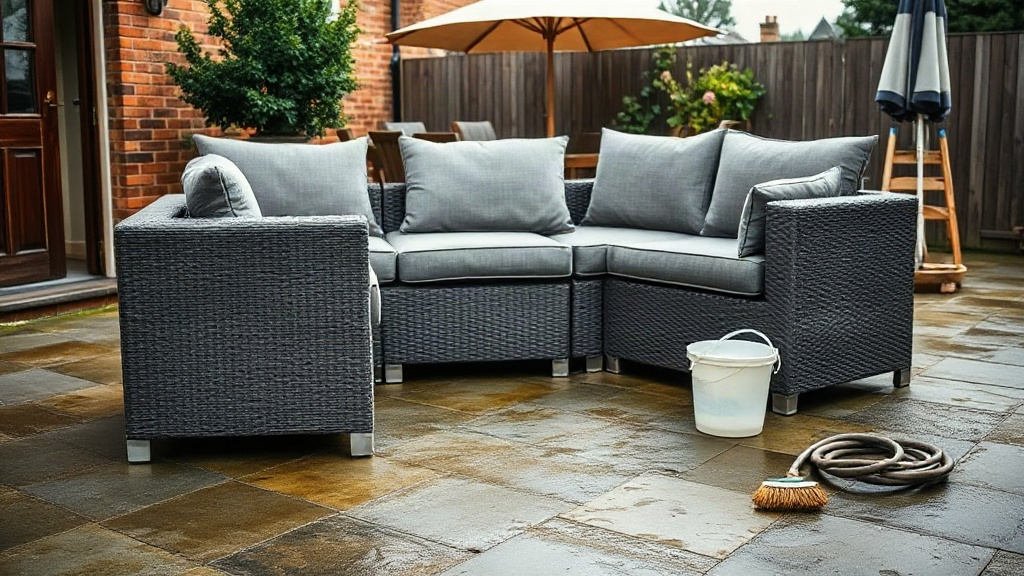
Cleaning rattan and resin-weave furniture is the easy part. Almost every care guide gets the wash right and still lets the set go mouldy again within a season, because the real failure point sits after the rinse, not during it. If your set has come out from under its cover carrying green algae on the seats and a musty smell that says mould has already moved in, the routine below will shift both — but only if you don’t skip the step most guides treat as an afterthought.
The Right Tools for the Job
Before you touch the furniture: the two most tempting shortcuts do the most damage, and it’s worth knowing why before you reach for either.
The first is bleach. It smells like cleaning, it whitens things, and it’s probably under your sink. The problem is that bleach attacks the UV stabilisers in HDPE resin-weave. Manufacturers add these to stop the weave going brittle and fading in British summers. Strip that protection and the fibres attract dirt faster after each wash and start to crack. That’s a short-term clean bought at the cost of a long-term one — and it’s the same trade-off the RHS’s own furniture-care advice steers you away from, since it recommends nothing stronger than soap and water for outdoor pieces.
The second shortcut is a pressure washer. It’s fast, it blasts algae off, and you feel like you’re getting somewhere. But the high-pressure jet forces water into the hollow core of the resin weave and down into the frame joints. Once the frame gets damp from the inside, rust starts on any exposed metal, and you’re looking at a structural problem rather than a cosmetic one. It’s a risk flagged consistently across rattan care guides, not just one manufacturer’s opinion — Harbour Lifestyle’s own care guide is explicit that pressure washers shouldn’t go anywhere near rattan at close range, and points you to a hose on its gentlest setting instead.
So what does work? A soft-bristle brush — an old toothbrush is perfect for the weave gaps — a bucket of warm water, and a squirt of ordinary washing-up liquid. That’s it. The washing-up liquid is mild enough not to strip the UV coating, the soft brush gets into the weave without cutting the strands, and the whole job takes about twenty minutes for a corner sofa set. If you want to add a mould-specific cleaner for stubborn black patches, something like Wet & Forget works better than bleach because it kills the mould without attacking the resin.
It’s also worth flagging the cheap-rattan failure mode most owners hit: the weave starts to look rough and patchy after two or three aggressive washes. Owners who stick to the mild soap approach tend to get years more presentable life out of the same set.
Why Drying Is the Step That Actually Matters
This is the step every cleaning guide mentions in passing and no guide actually emphasises — and it is the difference between a set that looks clean for a month and a set that stays clean.
When you wash resin-weave with soapy water and rinse it, the water doesn’t just sit on the surface. It wicks into the gaps between the strands. HDPE resin-weave is hollow-core material — each strand has a void inside it, and when water runs down the surface it gets drawn into those voids by capillary action. The weave looks dry after five minutes because the surface water has evaporated, but there’s still moisture sitting inside the structure. In the UK’s typical humidity of 70–90%, that trapped water doesn’t evaporate quickly — it sits in the weave creating exactly the warm, damp microclimate that mould needs to take hold.
The result is that a set can develop a musty smell and visible mould in the weave within weeks of being cleaned and covered, without ever looking wet on the surface. It’s a common complaint about cheap rattan — that it goes mouldy even indoors, in storage, nowhere near rain — but that’s not usually a quality problem with the resin. It’s the same damp-trap mechanism in the weave structure, just working more slowly. The fix isn’t a better mould spray. The fix is drying the weave immediately after every wash, before you cover it or put it away.
Harbour Lifestyle’s own care guide — the same one that told you to keep the water pressure gentle — is blunt about the drying rule too: never put the furniture away dirty or damp. That’s the manufacturer’s own line, and it exists precisely because of this damp-trap problem. Covering the set while it’s still even slightly damp is the single most common way people undo a good clean in one afternoon.
So the committed call is this: for any resin-weave set in the UK, the cleaning method matters far less than the drying step. Use a soft brush and mild soap — yes. But if you skip the drying, everything else is undone within a few weeks. For a set you use heavily through summer and then store or cover over winter, drying is the step that actually saves it.
Step-by-Step Cleaning Routine
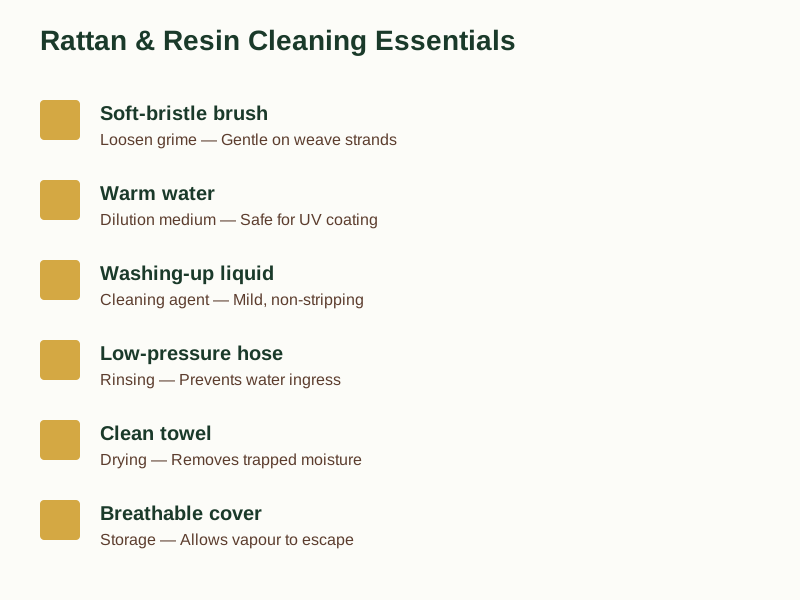
Here’s the six-step routine that covers everything, and the short kit list behind it. Don’t skip step five.
| Tool | Purpose | Why It Matters |
|---|---|---|
| Soft-bristle brush | Loosen grime | Gentle on weave strands |
| Warm water | Dilution medium | Safe for UV coating |
| Washing-up liquid | Cleaning agent | Mild, non-stripping |
| Low-pressure hose | Rinsing | Prevents water ingress |
| Clean towel | Drying | Removes trapped moisture |
| Breathable cover | Storage | Allows vapour to escape |
Step 1: Remove the cushions and store them dry. Cushions are the most vulnerable part of any resin-weave set. They hold water, take days to dry from the inside even when the surface feels dry, and slowly mildew if left damp under a cover. Take them off, store them in a dry ventilated space — a shed, a garage, or even a large plastic storage box in the house. This applies even to sets advertised as “all-weather” or “cushion-safe” — the cushions themselves still prefer to spend winter dry.
Step 2: Brush off loose dirt and cobwebs. Use a soft brush or a duster, working from top to bottom so you’re moving dirt off rather than redistributing it. Pay attention to the tight bends in the weave where spiders like to nest — those bends are also the points under the most flex stress, so keeping them clear of debris helps structurally as well as visually.
Step 3: Wash with soapy water using a soft brush. Dip your brush in warm water with a squirt of washing-up liquid and work around the frame, going with the direction of the weave rather than across it. This follows the natural structure of the weave rather than catching and pulling strands. Don’t scrub hard — you’re looking to lift grime, not scour the surface.
Step 4: Rinse thoroughly with a hose on low pressure. A watering can or a hose on its lowest setting is fine. You’re removing the soap residue, which if left in the weave will attract more dirt once it dries.
Step 5: Dry the weave immediately. This is the step. Grab a clean towel and work it through the weave strands — press the towel against the weave and draw it through, starting at the top of each section and working down. Then leave the frame to air-dry completely before you do anything else. If the weather is mild and dry, an hour or two in direct sun is ideal. If it’s overcast and damp — which in the UK is most of the time — you might need to leave it overnight. The test is simple: run your hand over the weave and feel for any cool dampness. If it feels dry and warm, it’s ready.
Step 6: Air-dry the frame completely before covering or storing. Once the weave is dry, let the frame sit for a while longer to make sure any moisture in the frame joints has evaporated too. Covering too early is the most common mistake at the end of the season — the furniture looks dry on the surface, goes under a cover, and the residual moisture does its work quietly over winter.
Related Guides
For a complete overview, see our Garden Furniture Care by Material: Teak, Rattan, Metal & Plastic (UK).
Want to make sure you never miss a step? Grab the Free Garden Furniture Care Checklist and keep it somewhere you’ll actually see it when you’re doing this. It’s the quick reference that stops you skipping the drying step because it “looks fine already.”
Winterising and Storage
If you’re using the set through the winter — many people do, with a cover — the same rules apply but more so. Clean and dry the set thoroughly before the cover goes on. Use a breathable waterproof cover, not a plastic bag or a tarpaulin. A breathable cover lets moisture vapour escape rather than trapping it against the furniture, which is exactly the damp-trap scenario we’ve been talking about. Ranges vary in exactly what their manufacturers recommend for storage, so if yours came with its own care card, follow that over any general advice here.
📺 Watch: How To Cover Garden Furniture In The Winter — Sitting Spiritually of Lyme Regis
The difference between a breathable cover and a cheap plastic one is significant enough to mention: a plastic cover is genuinely worse than no cover at all for resin-weave furniture, because it traps condensation and keeps the furniture wetter than if it were simply exposed to air. If you’re buying a new cover, look for one described as “breathable” — it costs a bit more than the budget option, but it’s the difference between a set that comes through winter clean and a set that comes through winter smelling of mould.
Cushions still go inside, dry. Even on the higher-end ranges with weather-rated cushion covers, the manufacturer’s own guidance is explicit: cushions must be stored dry. Leaving them under a breathable cover is better than leaving them exposed to rain, but the ideal is a dry indoor space.
For sets you want to put away completely, a dry shed or garage is fine as long as it’s ventilated. Don’t seal the furniture in a plastic bag for months — that’s just recreating the damp-trap problem in a smaller space.
Frequently Asked Questions
Can I use bleach to clean mould off my rattan?
No. Bleach damages the UV stabilisers in the resin, which makes the weave more susceptible to dirt, fading, and cracking over time. For black mould patches, use a dedicated mould remover like Wet & Forget — it kills the mould without attacking the resin coating.
How often should I clean my rattan furniture?
A thorough clean at the start of the season and again before winter storage covers the main maintenance most owners need. Lighter wipe-downs during the summer are fine — you’re removing surface grime and bird droppings rather than doing a full deep clean every few weeks. The start-of-season and pre-winter cleans are the two that actually affect how long the set lasts.
Will pressure washing damage my resin-weave?
Yes. High-pressure water forces moisture into the hollow weave core and the frame joints, which causes the frame to rust from the inside out. The surface looks clean immediately afterwards, but the damage builds quietly over time. A low-pressure hose or a bucket and soft brush does the job without the risk.
Where to Go From Here
Getting the wash right was never the hard part — a soft brush and washing-up liquid will always get you there. What decides whether the set is still clean in a month is the ten minutes of towel-drying most people skip because the weave already looks dry. Do that one thing properly and you’ve done more for the set’s lifespan than any expensive cleaner or treatment could manage.
The tools you need are already in your kitchen. The RHS’s own furniture-care advice and Harbour Lifestyle’s rattan guide both back the same basics — soap, water, patience with the drying. What the set needs now is a free afternoon and a dry day, and it can be sitting on your patio looking like it did when you first brought it home. Grab the Free Garden Furniture Care Checklist for the step-by-step to keep beside you while you work — no guesswork, just the right order.