Washing-Up Liquid vs Furniture Cleaner: Which Is Enough?
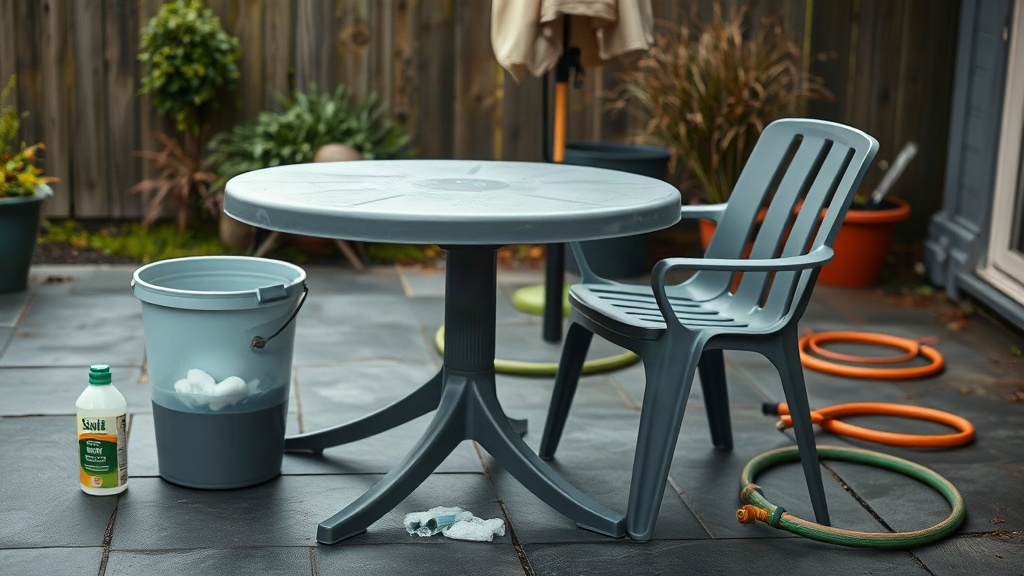
Every bottle of specialist furniture cleaner on a garden centre shelf is quietly making the same pitch: your washing-up liquid isn’t good enough. Half the time that’s marketing, not chemistry — plenty of garden furniture cleans up perfectly well with a squirt of Fairy and a rinse. But not all of it does, and working out which half you’re in is worth five minutes’ thought before you start scrubbing. Get it wrong on the wrong material and you don’t just waste a Saturday morning — you speed up the damage you were trying to fix.
The honest answer comes down to what your furniture is actually made of. For most of it, the cheap option is the right one. For two materials, it isn’t — and the reason isn’t opinion, it’s basic chemistry.
The Weather Is Already Doing Half the Damage
In the UK, garden furniture faces a specific kind of punishment: a damp, mild autumn, a wet winter that doesn’t quite freeze, and a spring that throws warmth, pollen, and more rain at the furniture all at once. Furniture that would shrug off neglect in a drier climate deteriorates faster here, and the wrong cleaning choice compounds the problem.
The RHS recommends carrying out garden furniture maintenance in dry weather, ideally at the end of summer or whenever the furniture is properly dry, and it also points to heavy-duty waterproof covers for winter protection. That last point is where many owners come unstuck: a cover put over furniture that’s still damp traps moisture against the frame, which can worsen mould and mildew, or lead to rot in wooden contact points where water sits longest. A cover only protects if what’s underneath it was dry to begin with.
Beyond the cover issue, washing-up liquid itself creates a problem on certain materials. It’s alkaline — typically sitting somewhere around pH 8–9 — and that’s the range that can strip natural oils from wood over repeated use. On non-porous surfaces like plastic and metal, that alkalinity is irrelevant; the soap rinses away cleanly. On wood, it disrupts the surface chemistry in a way that can attract more grime over time. Dedicated furniture cleaners tend toward a neutral pH around 7, which lifts dirt without leaving a film that feeds the next round of mould spores.
What owners report on forums bears this out: a teak bench that looked a bit tired after a summer’s use, cleaned with soapy water through autumn, often turns up after winter looking black and slimy. The soap isn’t entirely to blame — the UK climate does most of the damage — but it doesn’t prevent that outcome, and on teak and rattan it actively makes things worse.
Where the Cheap Option Wins
For plastic and metal garden furniture, washing-up liquid is the right tool for the job. It cuts through grease and food residue at almost no cost, and it’s non-abrasive at normal dilution. The process is simple:
- Mix warm water with a small squirt of washing-up liquid in a bucket
- Use a soft sponge to work the solution over the surface, paying attention to areas with visible grime
- Rinse thoroughly with clean water — this is the step that matters most
- Dry with a clean cloth or let it air dry in the sun
That last step is worth dwelling on. Most people do the first two, rinse half-heartedly, then leave the furniture to dry on its own. If it’s sitting on a patio in late spring with a breeze, that’s fine. If it’s October and the furniture is in a shaded corner, it stays damp long enough for the next problem to start. This whole approach only works on non-porous surfaces — smooth plastic, powder-coated metal, tempered glass — where the soap rinses away completely.
It gets trickier on metal furniture with surface rust or older staining. Washing-up liquid handles light surface cleaning, but it won’t shift water marks or rust staining that’s been sitting for a while; a dedicated metal cleaner is worth considering for that. For weekly maintenance on a set that’s in decent shape, though, washing-up liquid does the job perfectly well.
Where It Actively Works Against You
For teak and rattan garden furniture, washing-up liquid is the wrong choice. The issue is different for each material, but the mechanism is the same: the cleaner fights the surface rather than working with it.
On teak, the wood’s natural oils are what give it outdoor durability. Washing-up liquid doesn’t dissolve those oils, but it leaves a residue that feeds mould spores, and the result after a season of UK weather is the black, slimy patina many owners recognise. Dedicated teak cleaners use surfactants that lift surface grime without leaving that residue, at a neutral pH that doesn’t interfere with the wood’s protective chemistry. You’ll pay more than the price of a squirt of Fairy — but against a set that cost several hundred pounds, a bottle of proper teak cleaner is a small outlay for the formulation actually doing what you need it to do, rather than fighting it.
On rattan and resin-weave furniture, the problem is texture, not chemistry. The tight bends and woven gaps trap fine grime, dust, and organic matter — exactly the kind of dirt that a quick wipe with soapy water spreads around rather than removes. Forum users who’ve tried cleaning rattan with washing-up liquid often report a sticky film left behind, which then attracts more dust and makes the furniture look worse within weeks. A specialist rattan cleaner penetrates the weave properly, and a soft brush gets into the gaps in a way a sponge can’t.
If you can’t get hold of a specialist cleaner right now, rinse the washing-up liquid off completely and get the piece into direct sunlight if possible. That’s a stopgap, not a fix, but it beats leaving soapy water to dry on the surface.
Matching the Cleaner to the Material
The decision comes down to two questions: what’s the furniture made of, and how dirty is it?
If the answer is plastic or powder-coated metal and the dirt is surface grease, washing-up liquid is fine — warm water, a thorough rinse, dry in the sun if you can manage it. If the answer is teak, rattan, or woven resin, or the furniture has algae, mould, or ingrained grime, reach for a dedicated cleaner with a neutral pH instead. It costs a bit more, but it’s formulated for the job, and on furniture worth several hundred pounds that’s not where the saving should come from.
| Material | Best Cleaner | Key Consideration |
|---|---|---|
| Plastic | Washing-up liquid | Non-porous, rinses clean easily |
| Powder-coated metal | Washing-up liquid | Handles grease well, but not rust stains |
| Tempered glass | Washing-up liquid | Simple rinse and dry required |
| Teak | Specialist cleaner | Avoids soap residue that feeds mould |
| Rattan/Resin-weave | Specialist cleaner | Penetrates tight weave gaps effectively |
| Wood (general) | Specialist cleaner | Neutral pH protects natural oils |
| Metal (rusty) | Specialist cleaner | Removes water marks and ingrained stains |
The rule that covers either column: rinse thoroughly, and dry the furniture in direct sunlight if you can before it goes anywhere near a cover. Damp furniture sealed up for winter is where most of the serious damage in a UK garden actually happens.
Now you know what to look for — Get the Free Garden Furniture Care Checklist to keep your seasonal routine on track.
Frequently Asked Questions
Can I use bleach on my garden furniture?
No — bleach is too harsh for wood and resin-weave materials, and it will strip the colour from most finishes while leaving the surface more vulnerable to further damage. On metal, it can accelerate corrosion under the surface. If you’re dealing with mould, a specialist mould remover or a solution of water and white vinegar applied with a soft brush is a better starting point.
How often should I clean my garden furniture?
For plastic and metal, a quick clean with soapy water once a month during the summer season is usually enough. For teak and rattan, a deep clean once a season — ideally in late spring before heavy use, and again in early autumn — is a better rhythm. Little and often beats a big rescue job once a year.
What’s the best way to remove mould from garden furniture?
White vinegar diluted with water is a reasonable starting point for light surface mould on hard surfaces, applied with a soft brush and rinsed thoroughly. For heavier mould growth, especially on wood or woven materials, a dedicated mould remover formulated for outdoor furniture works better. The more useful question is why the mould got a foothold in the first place — damp storage, poor ventilation, or a cover put over furniture that was still wet are the usual causes, and those are worth fixing before the mould comes back.
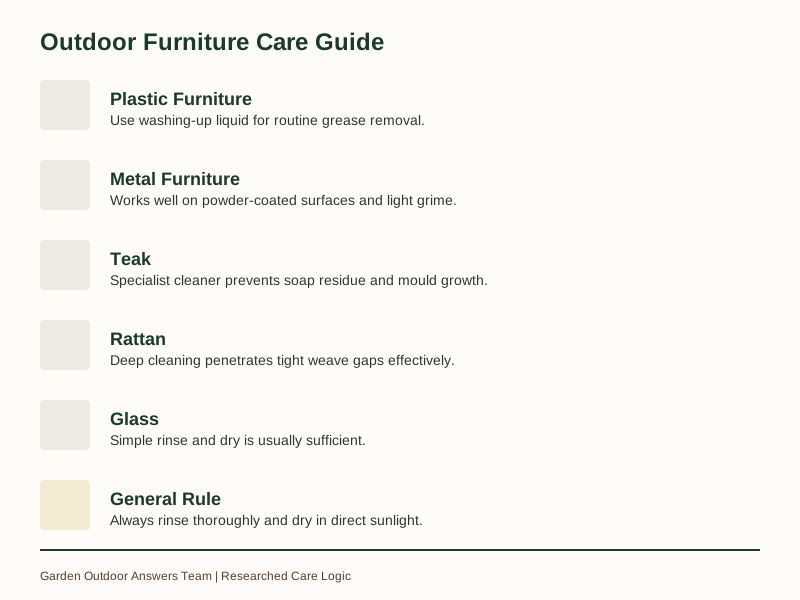
So Was the Marketing Right?
Partly. For plastic and metal, no — washing-up liquid does the job, and there’s no reason to spend more on routine weekly cleaning for those materials. For teak and rattan, the specialist bottle earns its keep for once: the mechanism is real, not invented for the label. The product you choose matters less than matching it to what you actually own, rinsing it off properly, and letting the furniture dry before it gets covered or put away for winter — points backed by the RHS’s own advice, and echoed by retailers like Homebase and Wickes in their own care guides.
Related Guides
For a complete overview, see our Which Oil for Outdoor Wooden Furniture: Teak vs Softwood vs Hardwood UK.
If you’ve read this far, you’re likely someone who’d rather look after what they own than replace it. Get the Free Garden Furniture Care Checklist for a seasonal routine that covers what to do and when.