Can Your Garden Furniture Survive a UK Winter?
As an Amazon Associate we earn from qualifying purchases. Some links on this page are affiliate links, which means we may earn a small commission if you make a purchase.
Search for advice on looking after garden furniture and you get three answers depending on who’s selling. The brand that sold you the set pushes its own branded care kit. The generic DIY site gives you one routine for every material, as if teak and plastic failed in the same way. Nobody in the middle actually asks what your furniture is made of before telling you what to do—and that is the one question that decides everything else. This article is that missing middle: the material-first decision map for cleaning, oiling, covering and repairing garden furniture through a UK winter.
Three years ago you bought the set for the Bank Holiday heatwave. It looked brilliant. Then came the first proper winter, and it hasn’t really recovered since—moss in the corners, metal armrests showing orange specks, cushions that stay flat and damp-smelling no matter how many times you wipe them down. None of that is because you did anything wrong. It’s because the advice you followed wasn’t written for your material.
The UK Care Dilemma: Clean, Cover, or Replace?
What your furniture is made from decides almost everything else in this article. Synthetic rattan is water-resistant and easy to clean, but the resin fibres go brittle under UV—rain isn’t really the threat, sun is. Teak has natural oils that resist rot for years, but those oils deplete over time and the surface silvers as a result, a cosmetic change rather than a structural one. Metal is strong and low-maintenance right up until the powder-coated finish cracks at a chip or weld point, after which rust spreads underneath where you can’t see it. Plastic is the easiest of the four to clean but the least UV-resistant—how long it lasts before it turns brittle depends heavily on whether the manufacturer bothered adding UV inhibitors, anywhere from a couple of seasons for the cheapest unstabilised plastic to a decade or more for the better-made sets. None of this is cosmetic trivia. It’s the order of operations for what your furniture actually needs.
The “right” care routine is not one size fits all. It is a decision tree, and the first branch is the material. A brush-and-soap approach that works fine on metal will do nothing for the UV brittleness setting into your rattan, and the same teak oil that restores one set will go sticky on another if the conditions are wrong.
Owners of teak sets consistently report the same pitfall: using a cheap oil in damp British conditions and finding it stays tacky for weeks, attracting grit and grime rather than repelling them. That is not teak failing—it is the wrong product for the climate.
Synthetic Rattan: The UV Risk
Rain is not really what threatens a synthetic rattan set—sun is. The weave is usually polyethylene or a similar resin, and unlike natural rattan it does not absorb water: it will not warp, crack or rot from a wet British autumn. A soft sponge, warm soapy water, and a thorough dry is generally all a rattan set needs through the summer. A pressure washer is not the tool for this job—the high-pressure water forces its way into the weave at stress points and accelerates the splitting that UV has already started.
The main enemy of rattan is not rain; it is sun. Ultraviolet radiation makes the resin fibres go brittle over time, particularly at the tight bends of the weave where the material is under the most flex stress. A rattan set that spends its summer fully exposed to direct sunlight will look noticeably more fragile after two seasons than one that is shaded or covered when not in use. This is the care decision most people skip: rattan needs sun protection as much as—and arguably more than—it needs rain protection.
The practical implication is straightforward. A breathable cover in summer when the set is not in use makes a real difference to longevity. It does not have to be an expensive year-round cover—a simple sun shade cover through the hotter months addresses the main degradation mechanism. Rattan cushions are worth treating with a waterproofing spray such as Fabsil Universal Protector (paid link), which provides reliable water repellency and adds some UV resistance to the fabric. The trade-off is that it needs good ventilation during application—the smell is strong and lingering—but once dried it is colourless and effective.
There isn’t really a reliable budget alternative here—professional-grade fabric waterproofing spray that actually holds up through a wet season costs what it costs. The mid-range options work; the very cheap end tends to leave an uneven coating that fails in heavy rain. This is one of the clearer product categories where the price difference reflects a real performance gap rather than branding.
For a rattan set, the care priority order is: keep it clean and dry through the season; protect cushions with a waterproofing spray at the start of spring; cover it from direct summer sun when not in use; and store cushions indoors or in a dry place over winter rather than leaving them under a damp cover.
Teak: The Silvering versus Oiling Decision
Teak is the material most tangled up in confusing advice, and the confusion starts with the thing that makes it good. Teak contains natural oils that repel water and resist fungal growth—that is why it has been used for marine and outdoor furniture for centuries. The oils are the reason teak outperforms most other hardwoods in wet conditions without any treatment at all.
📺 Watch: How I Restored My Outdoor Furniture \ A Beginner's Guide To Cleaning, Oiling, and Staining Wood — Quynh Pham
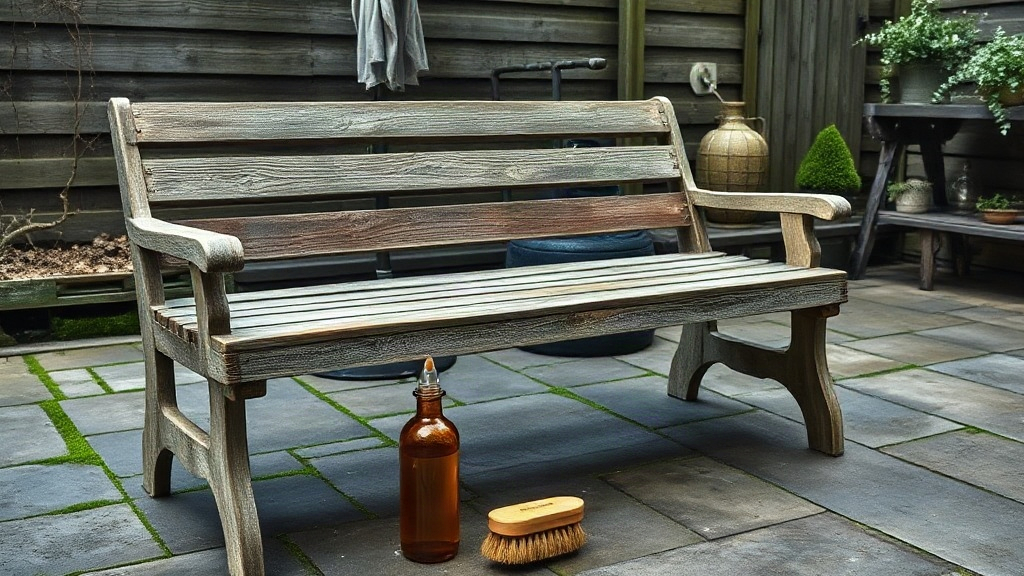
What the oils do not do is last forever. Under a UK climate of rain, cold winters and relatively modest summer UV, those oils slowly deplete from the surface layers. When they go, the wood’s surface lignin breaks down under UV exposure, and the classic silver-grey patina sets in. Here is the thing most care guides get wrong: the grey is not rot. The wood underneath the silvered surface is usually structurally fine. You are looking at a cosmetic change, not a failure. Whether you treat it or leave it is a lifestyle decision, not a structural one—and those two paths lead to very different maintenance routines.
If you are happy with the silvered look, the honest recommendation is to leave well alone. Do not oil it, do not sand it, do not apply anything. Wash it once a year with warm soapy water to remove surface grime, let it dry, and leave it. It will not rot. It will just go on being grey and looking like weathered teak, which—to many owners—looks considerably better than neglected-oiled teak that has gone sticky in the damp.
If you want to maintain the brown colour, oiling is the route. But this is where the product choice gets real. The three oils most commonly discussed—Ronseal, Rustins, and Thompson’s Teak Oil—all work, and all have meaningful trade-offs specific to UK conditions.
Ronseal Teak Oil (paid link) dries faster than most alternatives, which matters in a climate where a dry weekend is not guaranteed. Owners consistently find it easy to apply and it brings back a natural-looking colour, particularly on newer or recently cleaned teak. The trade-off that does not appear in the marketing: it can go sticky and attract grime in damp UK conditions, particularly if applied before the wood was fully dry. That is the complaint that comes up most often in owner forums, and it is avoidable with better preparation rather than a product failure.
See current price on Amazon → (paid link)
Rustins Teak Oil is the pick for owners prioritising safety and low odour—it has a food-safe formulation and owners describe the smell as mild compared to the stronger solvents in some alternatives. The trade-off is drying time: buyers who need to apply multiple coats in a single weekend find it frustrating, reporting they can realistically only manage one coat per day because the cure time is long in cool or damp weather. If you have a sheltered, warm afternoon and a weekend to spare, Rustins delivers the better finish. If you are working around a British summer forecast, Ronseal is the more practical choice.
Thompson’s Teak Oil has the worst consistency record of the three. Owners report noticeable colour variation between batches—some describe the result as orange or rusty rather than the warm teak brown they expected. It can also stay tacky longer than expected, and the fumes during application are significantly stronger. The honest assessment: useful if you can test it on a small area first and it works for your particular wood, but not the reliable default choice.
A step owners frequently use before oiling is oxalic acid to restore greyed teak back to a neutral tone—this removes the silvered surface layer chemically before the oil goes on, giving a more even result. It works well when done correctly but requires thorough neutralising and drying afterward, so it adds a full day to the process.
The decision framework for teak: if the silvered look does not bother you, stop treating it and enjoy the low-maintenance route. If you want the brown, invest in proper prep (clean, dry, oxalic acid if needed), pick Rustins if drying time is not your constraint or Ronseal if it is, and test on a small area first. If you do oil it, do it once a year in late spring when a dry spell is forecast, and only on wood that is clean and completely dry. Spend a bit more than the cheapest bottle on the shelf—the bargain-bin oils are consistently where the sticky-grime problem starts.
Metal: The Rust Trap
Rust is really a coating problem, not a metal problem. Aluminium is lightweight, structurally sound, and—critically—does not rust the way iron does. Powder-coated steel has a protective finish that works well while it stays intact. The failure mode is the same for both: the finish breaks at a specific point, and once it does, the metal underneath starts to corrode.
📺 Watch: Rusty Metal Garden Chairs Makeover — Aubrey’s Absolute Decorating
For powder-coated metal, the failure points are chips from impact, scratches from dragging across stone or concrete, and weld points where the coating was never fully continuous in the first place. Persistent damp sitting against a chip is the accelerator. The rust does not stay at the chip—it spreads outward under the surrounding coating by capillary action, often becoming visible several centimetres away from the original damage. By the time you see a patch of surface rust, the coating underneath has usually already lifted.
The care priority for metal furniture is therefore prevention, not cure. Drying it thoroughly after rain—particularly the underside, legs, and any joints—makes a measurable difference to how long the coating lasts. A quick wipe-down after a heavy downpour is the single most effective maintenance habit for metal furniture owners, and it takes about two minutes. The alternative is a repair job that costs more time and money than the prevention ever would.
Cleaning is straightforward: hot soapy water and a soft cloth does the job through the season. Avoid anything abrasive—a scouring pad on powder coating removes more protection than grime. If the finish has gone dull rather than damaged, a dedicated cleaner for powder-coated surfaces is worth the small investment.
When rust has already started, two products cover most situations. Hammerite Kurust (paid link) is the budget-friendly option for small rust patches—it converts surface rust to a paintable black primer and works well for stone chips, scratches and similar localised damage. It does need proper preparation: wire-brushing loose rust and degreasing the area first makes a significant difference to how well it holds. Owners who skip the prep work tend to report that the rust comes back quickly. Holts Rust Converter is the stronger option—it turns rust black and leaves a harder, more durable finish—but it costs more and is most worth using when the damaged area is larger or you are planning to repaint over it.
The practical sequence for metal furniture care: prevent at the chip stage (dry it, touch up with a matching repair paint if available), treat small rust spots with Hammerite Kurust (paid link) as they appear, and save Holts Rust Converter for areas where rust has spread further. Trying to repair badly rusted furniture after several wet winters is rarely worth the cost—that is when replacement becomes the honest call.
Plastic: The UV Embrittlement Reality
Cleaning plastic is the easy part. Warm soapy water handles most marks, and unlike wood or metal, it does not require any special attention to avoid staining or corrosion—of the four common materials, it is the most forgiving to keep clean.
What it cannot handle is prolonged UV exposure without a cost. Ultraviolet radiation causes plastic to become brittle and fade over time, a process called UV embrittlement. It is irreversible: once the material has degraded at a molecular level, no cleaning or treatment restores it. The surface may look clean but the structural integrity is compromised—a leg that snaps under normal weight is the typical failure mode for plastic furniture that has been left in direct sun for several years.
This does not mean plastic is a bad choice. It is the most affordable option for budget buyers, seasonal use, or situations where furniture gets heavy use and occasional rough treatment. A plastic set that is brought under cover through the autumn and winter, or kept in shade through the summer, will last considerably longer than one that sits in full sun year-round. The maintenance cost is low; the placement cost is the real variable.
For cushion treatment on plastic furniture, Scotchgard Outdoor Water Shield (paid link) adds useful water repellency for drizzle and light rain—owners report that it beads water effectively after application and does not significantly change the feel of the fabric. The trade-off is that heavy sustained rain will test its limits, and the initial smell is noticeably chemical. For full protection in a wet British winter, bringing cushions indoors is more effective than relying on any spray.
If you are buying plastic furniture new, it is worth checking whether it contains UV inhibitors in the formulation—higher-quality manufacturers add these, and it makes a meaningful difference to longevity. Budget plastic furniture often omits them, which is why two visually identical sets can age at very different rates.
The Ultimate Winter Shield: Furniture Covers
Of everything in this guide, a well-made cover is the single purchase most likely to pay for itself. Done properly, a quality breathable cover adds years to a set’s usable life: it keeps rain off the surface, cuts UV exposure during the dormant months, and stops debris building up in joints and crevices. For wood and metal pieces especially, fewer wet-dry cycles alone makes a real difference to how fast they degrade.
The single most common mistake with covers is covering furniture that is still damp. This traps moisture against the surface, and for metal it accelerates rust; for wood it creates exactly the conditions where mould and rot take hold. The correct sequence is: clean, allow to dry fully—ideally a dry day in autumn before the heavy rains—and only then cover. Clean twice a year if you can manage it, once at the start of spring and summer and again in autumn before covering or storing anything—the autumn clean matters more than people assume, since it strips grime, algae and surface dirt before the dormant months set in, so the set starts next season in better shape and dries faster the day you uncover it. A cover over damp furniture is worse than no cover at all.
What makes a cover worth its salt is breathability. A cheap unbreathable cover traps condensation just as effectively as rain—the fabric keeps water out but does not let moisture escape, so the furniture ends the winter damp regardless. Breathable waterproof covers allow the fabric to wick moisture away while still keeping rain out. Expect to pay noticeably more for one of these than for a thin waterproof-only sheet—but the extra cost buys a genuine, measurable performance difference, not just a better label.
A checklist for choosing the right cover:
- Waterproof and breathable — not just waterproof. Look for the specification rather than assuming the word “waterproof” on the listing means what you need.
- Secure fit — ties or straps that prevent wind from getting underneath and whipping the cover against the furniture, which causes abrasion damage over a winter.
- Ventilation — eyelets or mesh panels that allow air circulation.
- Appropriate size and shape — a cover that is too small leaves sections exposed; one that is too large pools with rainwater in the middle.
A cover matters most for wood and metal, and is still worth it for rattan and plastic. If your set was a proper investment rather than a bargain buy, a good cover is the cheapest insurance you will find against replacing it within five years.
Material Care Priorities
| Material | Primary Threat | Best Maintenance Strategy |
|---|---|---|
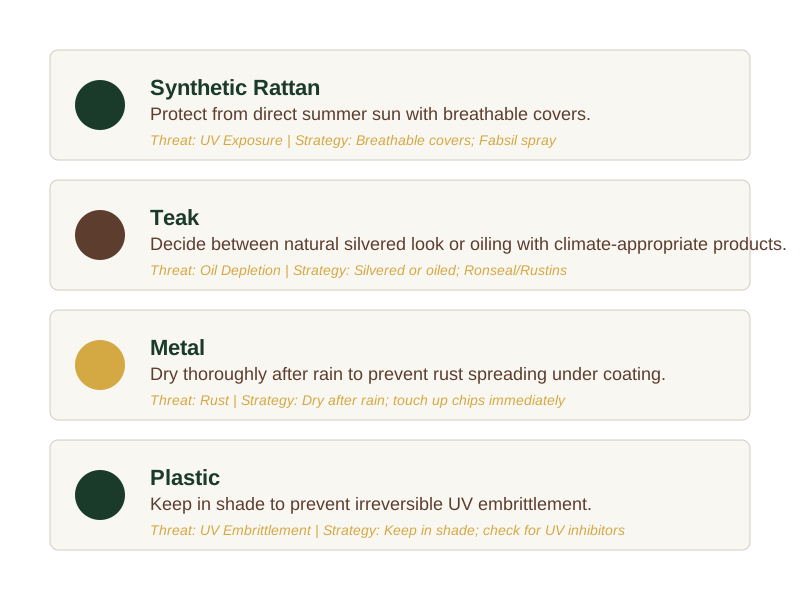
| Synthetic Rattan | UV Exposure | Use breathable summer covers; waterproof cushions with Fabsil spray. |
| Teak | Oil Depletion | Decide on silvered or brown; oil with Ronseal or Rustins depending on drying time. |
| Metal | Rust | Dry thoroughly after rain; touch up chips immediately to prevent spread. |
| Plastic | UV Embrittlement | Keep in shade; check for UV inhibitors when buying new. |
As an Amazon Associate we earn from qualifying purchases. The products linked above are ones we recommend based on independent research and owner feedback.
The Material Decides, Not the Label
Go back to the three answers you’d get if you asked around: the brand wants to sell you its own kit, the generic guide wants one routine to fit everything, and neither has asked what your furniture is actually made of. That is the question this whole article has been answering. Synthetic rattan needs sun protection more than rain protection. Teak needs a decision—silvered or brown—and then a product matched to the UK climate rather than whatever is on the shelf nearest the till. Metal needs the habit of drying after rain and jumping on any chip before it spreads. Plastic needs shade and realistic expectations about how long it will last.
None of this takes long once you know which routine applies to your set—that is the entire problem this article set out to fix, and the RHS’s own furniture care guidance covers the same basics on teak, washing and covers for anyone who wants a second opinion. Once you know your material, the decision about whether to clean, oil, cover or replace stops being conflicting advice and starts being a checklist.
Now you know what to look for—grab the Free Garden Furniture Care Checklist to build your material-specific routine in one weekend.
Explore More Topics
Go deeper on specific topics:
- How to Clean Teak Garden Furniture (and When Not to Scrub)
- Teak Oil vs Leave-to-Silver: Which Works Best in UK Weather?
- How to Clean Rattan and Resin-Weave Garden Furniture UK
- Plastic Garden Furniture: Renovate vs Replace Guide UK
If you have questions about a specific material or product that this article did not cover, get in touch and we will do our best to help you work out the right approach.