Can Your Plastic Furniture Survive a UK Winter?
As an Amazon Associate we earn from qualifying purchases. This page contains affiliate links — if you buy through them, we earn a small commission at no extra cost to you.
You pull out the garden chairs for spring, and the first thing you notice is the colour — gone is the fresh white or warm grey you bought, replaced by something closer to concrete. The UK’s damp winters do that. But fading is the visible problem; the way different plastics age underneath the surface is the one that actually decides whether your furniture is fixable. That’s where most of the “heat gun restoration” hacks you’ll find online quietly make things worse for a lot of UK gardeners.
If you’ve spent any time looking at patio furniture renovation tips, you’ve probably seen the videos: a heat gun, a plastic restorer, a chair that looks almost new. It looks simple. The problem is that those tutorials almost never specify what kind of plastic they’re working on — and in the UK, most budget plastic furniture is a type where heat restoration either doesn’t work or actively makes things worse. So before you spend money on a heat gun and a plastic restorer, it’s worth spending five minutes on the material science instead. The honest answer is that whether you renovate or replace comes down to one test: what your furniture is actually made of.
The UK Plastic Furniture Reality Check
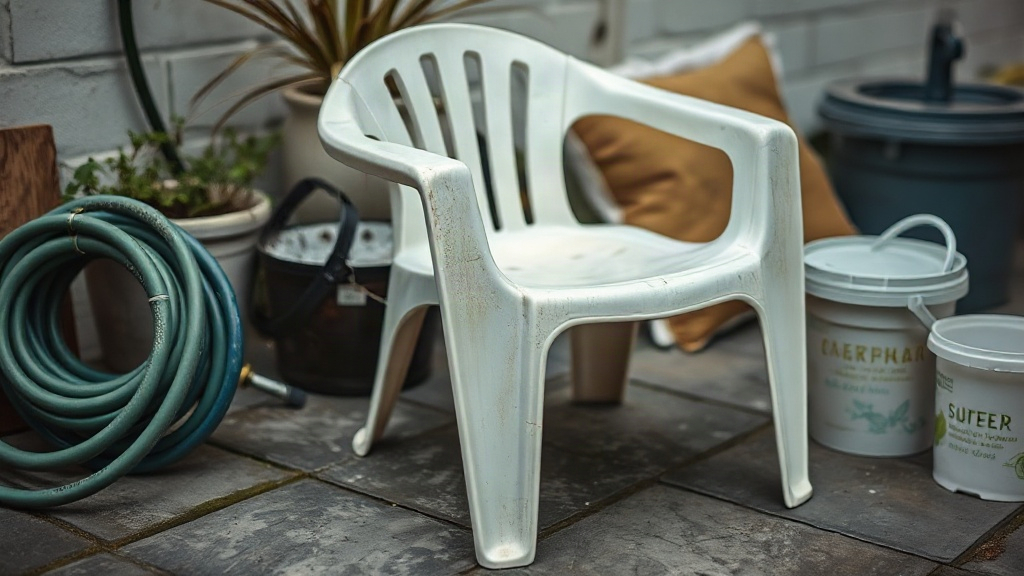
The scene plays out in gardens up and down the country. A heatwave arrives — increasingly rare, increasingly treasured — and you pull out the plastic patio set that’s been stacked in the corner of the garage since autumn. For a couple of weeks it’s brilliant. Then the rain comes back, and it goes back in the corner. Repeat for three or four years. By the following spring, you’re left with furniture that’s faded to grey, possibly gone brittle, and definitely not the piece you remember unpacking.
The RHS notes that plastic left outdoors over winter can become brittle over time; the repeated cycle of cold, damp, and UV exposure takes its toll. That’s the material science behind what looks like sudden failure: the polymer structure weakens gradually, then gives way when you apply any kind of pressure. The British winter isn’t doing your furniture any favours.
The way most UK households store plastic furniture actually makes the problem worse. If you cover chairs or stack a table while they’re still damp — and in a UK autumn, that’s almost guaranteed — you trap moisture underneath. That leads to staining, mildew on the surface, and a musty smell that no amount of spring cleaning fully removes. UK care guidance is consistent on this: dry everything thoroughly before it goes into storage, then cover it loosely enough that air can still circulate — a tight, sealed cover on damp plastic is how you turn light fading into a mildew problem. It’s the step that gets skipped most often, not because people don’t know better, but because nobody wants to stand in the garden waiting for a chair to dry before the first frost.
And then there’s the heat gun question. It’s everywhere on DIY social media: “restore your faded plastic furniture with a heat gun.” For some types of plastic, this genuinely works. For others, it’s a one-way ticket to warped, saggy, irreparable chairs. The difference comes down to what most UK budget furniture is actually made from, and most people don’t think to ask that question before they reach for the heat gun.
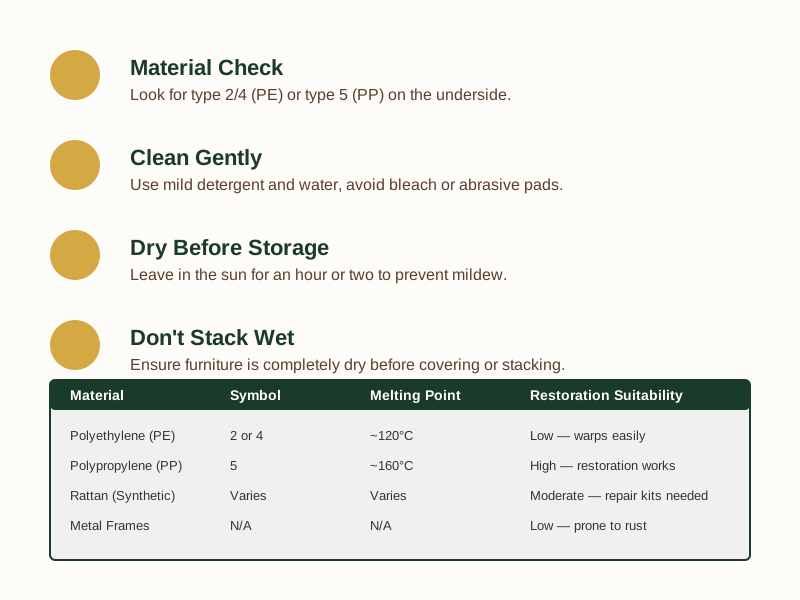
Here’s the quick test: flip the chair over or look underneath, and check for the recycling symbol. Most budget UK plastic furniture — the ranges sold at B&Q, Wilko, and similar high-street retailers — is polyethylene, which typically carries a type 2 recycling symbol (or sometimes type 4). Premium ranges from brands like Keter and Suncast tend to use polypropylene, which carries a type 5 symbol. It’s a 30-second check that could save you wasting money on the wrong restoration method.
For a full seasonal care routine — including the drying steps before storage and how to spot early brittleness before it becomes a snapped leg — there’s a free checklist that covers every material type: Get the Free Garden Furniture Care Checklist.
The Material Test: PE vs PP
The reason the same restoration advice can’t apply to every chair isn’t brand loyalty, it’s temperature. If you’ve ever Googled “heat gun plastic restoration” and found conflicting advice, that’s why: different plastics have a different point at which heat stops softening the surface and starts destroying the structure, and most of the tutorials online are made by people working with polypropylene furniture without realising their audience might have polyethylene.
Polyethylene (PE) is the dominant plastic in budget UK garden furniture. It has a lower melting point — roughly 120°C — and its UV stabilisers degrade uniformly through the entire thickness of the material, not just the surface layer. What that means practically: when PE ages and fades, the degradation has gone all the way through the board, not just the top millimetre. A heat gun applied to PE will often cause it to soften unevenly, warp out of shape, or sag at the joints. The honest verdict for PE furniture that’s faded or started to crack is simple: replace it. The economics work better than renovation even before you factor in the risk of making it worse.
Polypropylene (PP) is found in the majority of premium and mid-range branded sets — Keter, Suncast, and similar. It has a higher melting point (around 160°C) and crucially, its UV degradation is largely surface-only. The bulk of the material underneath stays structurally sound. A heat gun applied to PP can soften the surface layer enough to restore its colour and finish without compromising the shape underneath. If your furniture carries a type 5 recycling symbol and you have the patience for a careful, even application, renovation is genuinely worth trying.
Here’s the threshold in practice. If your furniture came from a budget high-street range, the odds strongly favour polyethylene — replace it rather than gamble on a restoration that’s more likely to make things worse. If you paid a premium for a branded set, check the recycling symbol: if it’s type 5 (PP), the heat gun route crosses into “worth attempting” territory.
One caveat worth stating plainly: even on PP furniture, a heat gun requires patience and an even hand. Rushing it or holding the gun too close will cause surface blistering regardless of the material type. But the difference is that PP will generally hold its shape; PE often won’t.
That’s consistent with the physics rather than anecdote: heat applied to a material that’s already degraded all the way through doesn’t restore a surface, it destabilises whatever structure is left. A softened, sagging seat is the predictable outcome of that combination, not bad luck.
Here’s the comparison in one place:
| Material Type | Recycling Symbol | Melting Point | Restoration Suitability |
|---|---|---|---|
| Polyethylene (PE) | 2 or 4 | ~120°C | Low — often warps or sags |
| Polypropylene (PP) | 5 | ~160°C | High — surface restoration works |
| Rattan (Synthetic) | Varies | Varies | Moderate — requires specific repair kits |
| Metal Frames | N/A | N/A | Low — prone to rust in damp winters |
How to Clean Plastic Furniture: The Safe Way
Before you consider any restoration or repair, the most effective thing you can do for plastic furniture is the simplest: clean it properly. And the right way to clean plastic is gentler than most people expect.
📺 Watch: Plastic Adirondack Chairs • Before & After - Restoration — Underground Upholstery
The RHS recommends cleaning garden furniture regularly with soap and water — not the specialised cleaners you’d reach for with teak or metal, just a mild detergent and a soft cloth or sponge. That simplicity matters. Plastic surfaces scratch easily, and once you’ve dragged a piece of wire wool across a chair leg, you’ve created a texture that traps dirt and grime for the life of the furniture.
The common mistakes are consistent enough to name, wherever you first heard them. People reach for bleach on white plastic furniture because it seems logical. What actually happens is that bleach can yellow or degrade the plastic over time, particularly on older formulations that didn’t have good UV stabilisers built in. The same goes for abrasive cream cleaners and anything with a gritty texture. They make the surface look clean in the short term, then leave it rougher than before.
High-pressure washers are another area where caution is needed. Some UK care guides allow gentle pressure washing on plastic furniture, but others explicitly warn against it — the pressure can force water into joints and seams, and over time that’s where trouble starts. The safest approach is a bucket, a soft sponge, and a thorough rinse. If you do use a pressure washer, keep it well back from the surface and avoid the joints.
Drying is the step most people skip. After cleaning, wipe the furniture down and leave it to air in the sun for an hour or two before it goes back under cover or into storage. Trapped moisture is what leads to the mildew staining that makes white furniture look grey rather than clean. The checklist covers this alongside the other seasonal steps: Get the Free Garden Furniture Care Checklist.
For stubborn marks — water stains, light mould, bird droppings that have left a mark — a paste of baking soda and water works better than harsh chemicals. Apply it gently, leave it for ten minutes, then rinse clean. Skip the abrasive creams and scouring pads here too; they scratch the surface and make the next clean harder than this one. It’s the kind of fix most people already have in the cupboard, which is the point: plastic furniture care doesn’t need specialist products.
Repairing Small Damage: What Actually Works
Some damage isn’t about the material type — it’s about specific failure points. Cracks in plastic seats, split weave on rattan-style furniture, surface rust on metal frames. These are fixable, but the method matters.
For rattan-style furniture — which is almost always synthetic PE weave over a metal or plastic frame — a dedicated repair kit is the practical route. The Feyart PE Rattan Repair Kit is explicitly marketed for plastic wicker material and includes a prying tool, which is the component that makes the difference for most repair jobs: you need something to lift and manipulate the existing weave without cracking the surrounding material. The Club Rattan kit is also a solid option, particularly if you’re doing structural repair work — it includes a stainless steel weaving tool that gives you more control on larger sections. Both kits are available on Amazon UK and work on most synthetic rattan sets. For the budget-conscious, starting with the Feyart kit makes sense; if you find you need the sturdier tool mid-repair, the Club Rattan option is the upgrade.
For surface rust on metal frames — the kind that appears at weld points and scratches after a wet winter — the vinegar and salt method is the one that comes up most consistently in DIY guides. White vinegar applied to rusted areas, left to work, then scrubbed with salt, chemically breaks down surface oxidation without damaging the surrounding paint or coating. It’s slower than a dedicated rust converter but it’s cheap, uses household ingredients, and gives you more control on detailed areas like decorative scrollwork. For anything that’s pitted deeply or structurally weakened, rust converter products like Hammerite Kurust (paid link) turn the remaining rust into a stable surface that’s ready for priming and overpainting — that’s the step to reach for when the damage is more than surface level.
Check Amazon price → (paid link)
Plastic cracks in seats or backs are harder. Superglue works for a temporary hold, but it doesn’t flex with the material, so it tends to crack again under load. A plastic welder — which melts a filler rod into the crack and fuses it properly — is a better long-term fix, but the kit costs more and requires more care to use cleanly. For a chair that’s already brittle from years of UK winters, the honest call is whether the repair is worth the effort versus just replacing the piece.
As an Amazon Associate we earn from qualifying purchases. The products linked above are ones we recommend based on independent research and owner feedback.
Taking the Next Step
The material test is the one thing worth getting right before you spend any money. Check the recycling symbol: type 2 or 4 means polyethylene, and your best option is replacement rather than renovation. Type 5 means polypropylene, and a heat gun with a plastic restorer is worth attempting if you’re patient. For everything else — cleaning, storage, rust spots, split rattan weave — the steps are straightforward and don’t require specialist products.
The reality of UK garden furniture is that most sets are bought for a couple of weeks of good weather and forgotten about for the rest of the year. That’s not a criticism; it’s just how most households use the space. The honest call for budget PE furniture that’s faded and cracked through several wet winters is to replace it rather than spend money trying to restore something that wasn’t built to last a decade in the first place. For premium PP sets, a careful restoration can extend their life by a season or two. Neither outcome needs a lot of spend — just knowing which question to ask first.
If you’re working through a full seasonal checklist — drying before storage, cleaning without abrasives, checking for early brittleness in the spring — grab the free guide that covers it for every material type: Get the Free Garden Furniture Care Checklist.
Related Guides
For a complete overview, see our Garden Furniture Care by Material: Teak, Rattan, Metal & Plastic (UK).
None of this replaces checking your own furniture’s care label, and a professional restorer is worth a call for anything higher-value or more elaborate than a garden chair — but the recycling symbol test above will settle the renovate-or-replace question for most UK gardens.