Can You Pressure Wash Garden Furniture? (Yes or No by Material)
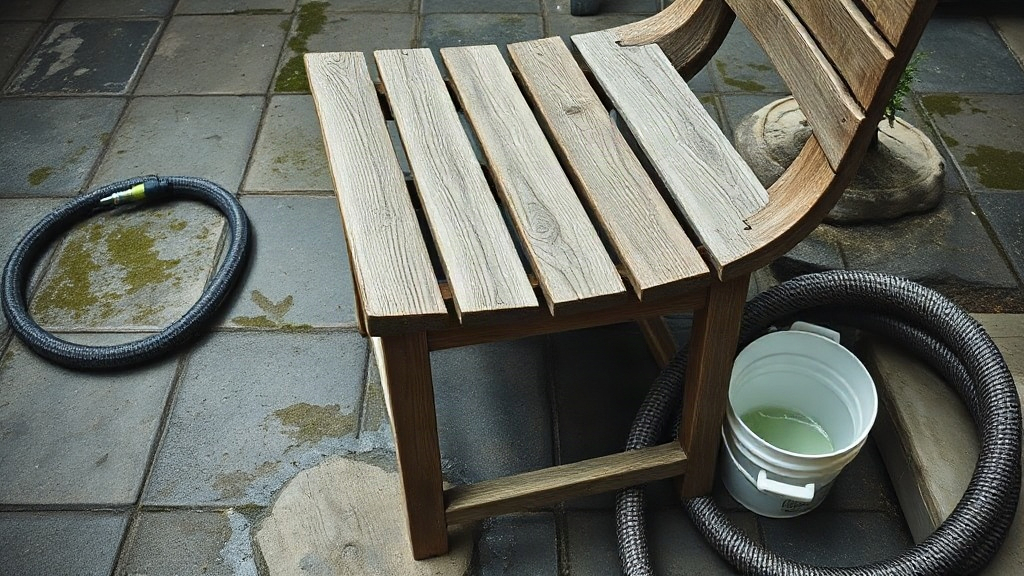
More pressure means cleaner surfaces — that logic works fine for a patio slab or a garden path. Pull the same trigger on your garden furniture and the maths flips entirely. For most of the sets sitting in UK gardens right now, a pressure washer is less a cleaning tool and more a slow-motion wrecking ball.
The confusion isn’t your fault. Manufacturers are inconsistent: some care guides say pressure washing is fine for hardwood or plastic, others say don’t even think about it. Retailers sidestep the question. Forums throw PSI numbers around without explaining why the same pressure that clears algae off a plastic chair cracks the coating on a metal armrest. The honest answer is material-specific, and it hinges on one question most guides never ask: what is the water actually doing to the surface underneath the dirt?
This article gives you the verdict material by material — which sets you can safely pressure wash, which ones you’ll ruin, and what to use instead for the mouldy rattan situation that prompted the search in the first place. The goal is a clean set that lasts through another damp British winter, not one that looks good for ten minutes then degrades faster than it would have left alone.
The Risks of High Pressure on Outdoor Furniture
The damage mechanism here is straightforward. High-pressure water doesn’t just shift dirt — it applies force to the surface it hits. On a teak dining table, that force lifts the wood grain. The fibres swell, splinter slightly, and don’t settle back flush when they dry. The surface comes out rougher than it went in, and you’ve done something you can’t undo with another wash.
On metal furniture, the same force can strip paint and drive water past seals and weld points where corrosion starts silently. On rattan and resin-weave, it gets worse: the weave has hollow cores. Pressure doesn’t clean the inside of those cores — it fills them with water, and in a cool, damp UK summer, that water has nowhere to go for days.
The UK climate adds a wrinkle that forums and care guides underplay. If you’re cleaning in autumn and the furniture doesn’t dry fully before temperatures drop, trapped moisture expands when it freezes. Ice crystals inside wood fibres and rattan cores do microscopic damage that accumulates over seasons. The mould problem is more immediate: once a set is damp through, the musty smell and the grey-green patches return faster each year, and eventually no amount of pressure washing reverses it.
The mistake most people make is grabbing the narrowest nozzle. A 0-degree or 15-degree jet concentrates the machine’s full rated pressure — often 1500 to 2000 PSI even on a modest consumer unit — into a single point, and surface damage happens in seconds even if the furniture looks fine immediately afterwards. The grain is raised, the coating is chipped, or the weave is saturated before you’ve finished the first chair.
The practical takeaway: pressure washers work best on flat, non-absorbent surfaces where force genuinely helps. On anything with wood, rattan, a coating, or a joint, the risk-to-benefit ratio is usually wrong. A wide fan nozzle at low pressure and held at distance helps, but if you’re unsure whether a specific piece of furniture can take it, a stiff brush, warm water, and mild detergent is the call that never backfires.
What Are You Actually Trying to Clean?
Before deciding on a method, it’s worth being honest about the job you’re actually doing — because there are three distinct cleaning jobs, and they don’t all point to the same tool.
Job 1: Remove accumulated dust and surface dirt. This is the baseline job for any set that’s been uncovered for a season. The furniture isn’t damaged, just dirty. For this job, a pressure washer does a reasonable job on hard, flat surfaces — the force physically dislodges grime from exposed faces. On anything porous or woven, it’s the wrong tool.
Job 2: Eliminate green mould and algae growth. This is the job that brings most people to the pressure washer in the first place, and it’s where the decision most commonly goes wrong. The set has gone dark green in patches. A pressure washer feels like the answer because you can see it working — the green flies off in patches. But what you’re actually seeing is surface removal, not biological kill. The water forces spores deeper into porous surfaces, saturates the substrate, and if conditions stay cool and damp for a few days after — which in the UK they routinely do — the mould comes back faster. You haven’t solved the problem, you’ve moved it slightly deeper.
Job 3: Protect the furniture’s structural integrity and surface condition. This is the job most care guides skip past, and it’s the one that should probably come first. The question isn’t just “how do I clean this?” but “will the method I use cause damage that shows up in six months?” Pressure washing wins Job 1 but loses Job 2 and Job 3 on most furniture types. Chemical cleaners lose Job 1 but win both Job 2 and Job 3. Manual cleaning wins Job 1 and Job 3 but loses Job 2. The three methods each do one job well and one job badly — except on plastic and powder-coated metal, where pressure washing genuinely wins across the board.
| Pressure Washer | Chemical Cleaner | Manual Cleaning | |
|---|---|---|---|
| Remove dust and surface dirt | ✓ Wins on hard, flat surfaces | ✗ Doesn’t dislodge grit | ✓ Wins — physical removal |
| Kill mould and algae | ✗ Forces spores deeper | ✓ Kills and creates barrier | ✗ Surface removal only |
| Protect furniture integrity | ✗ Risks grain, coating, weave | ✓ No physical force needed | ✓ Avoids all physical risk |
The honest question to ask yourself: is your set dirty, or is it mouldy? Because those are two different jobs, and they point to two different tools. If it’s just grime, a pressure washer on safe materials is worth considering. If it’s mould, reach for a chemical cleaner instead.
The Verdict by Material
The general rule is this: pressure washing is safe only on materials with non-porous surfaces that resist water entry. Everything else — anything with a grain, a weave, or a coating — carries risk that needs to be assessed specifically.
Teak: Never. Pressure washers strip the natural silica layer that sits in teak’s cell structure and makes the wood naturally water-repellent. Once that silica layer is gone, it doesn’t regenerate. The wood loses its inherent weather resistance, absorbs water faster, and silvers or greys unevenly. A teak set that’s been pressure washed once will need regular oiling to maintain its appearance thereafter — you have genuinely changed the maintenance requirement of the furniture. Some owners prefer the silvered look, and that’s fine — but they should reach it through neglect, not active damage. If your teak is silvered and you want it back to brown, an oxalic acid solution does the job without forcing water into the grain. And if what’s actually driving you toward the pressure washer is green mould rather than general grime, skip the wash altogether — a mould-specific patio cleaner, something like the Pro-Kleen Simply Spray & Walk Away formula, kills the growth biologically instead of blasting it off, and does it without forcing a drop of water into the grain. Apply it, leave it to work rather than scrubbing straight away, and let the following week’s rain carry off the dead growth.
Rattan and resin-weave: Avoid entirely. The weave has hollow cores, and a pressure washer forces water into those cores faster than they can drain. In a UK summer — cool nights, limited sun, frequent drizzle — drying time is measured in days rather than hours. The result is trapped moisture inside the weave, a musty smell that owners on gardening forums consistently trace back to a pressure wash, and accelerated mould growth. Synthetic rattan is slightly more resilient than natural rattan, but the weave-to-frame joints are still the weak point. Even on fully synthetic sets, a pressure washer should be a last resort. Teak and rattan are the two materials where the gap between “looks clean” and “is clean” costs the most — which is exactly why the chemical-cleaner route above is worth the extra day of waiting instead of the ten minutes with a wand.
Plastic (hard polypropylene, PVC, resin): Safe, with caveats. Hard plastic has a genuinely non-porous surface — water can’t penetrate it, so there’s no substrate for damage to hide in. Pressure washing works well for thick, dirty plastic furniture, particularly the kind that’s picked up grime on the underside where it sits against damp ground. The caveat: consumer machines commonly span roughly 1300 to 2000 PSI, and plastic’s damage threshold sits somewhere below the top of that range. Keep to the low end — 1300 to 1500 PSI — with the nozzle at least 30 centimetres from the surface, and you get the cleaning effect without the risk. If the underside problem is algae rather than dirt, though, that’s a mould job, not a grime job — a chemical cleaner applied to the affected area, followed by a gentle rinse, deals with it without pushing water up under the seat pan where it can pool and stagnate.
Powder-coated metal: Safe on low pressure, with care. The coating is the protective layer, and it’s thin. A pressure washer can chip or crack it at close range even at moderate pressure, and once the coating is breached, the metal underneath starts corroding. A wide fan nozzle, low pressure, and at least 30 centimetres of distance makes the difference between a clean set and a set with rust patches appearing two seasons later. Uncoated cast iron and wrought iron are a different matter — these are porous and will rust aggressively if saturated. Don’t pressure wash them.
Aluminium: Generally safe. Aluminium doesn’t rust the way steel does, so even if the coating is disturbed, the corrosion risk is lower. Low pressure, wide nozzle, maintain distance — the same rules apply.
Other wood (softwood, cheaper hardwood): Avoid unless you accept the consequences. If it’s not teak with its natural silica protection, pressure washing will raise the grain and force water into fibres that are more porous than you’d expect. If the furniture is already weathered and you’re planning to sand and re-oil it anyway, a low-pressure wash as prep is reasonable. If you want to preserve the existing surface, use a brush and mild detergent instead.
| Material | Pressure Wash? | Key reason |
|---|---|---|
| Teak | No — never | Strips silica layer, permanently reduces water resistance |
| Rattan / resin-weave | No — never | Water forced into hollow weave cores, causes trapped mould |
| Plastic (hard) | Yes — low pressure only | Non-porous surface tolerates force, but PSI matters |
| Powder-coated metal | Yes — low pressure, wide nozzle | Coating integrity is the weak point |
| Cast iron / wrought iron | No | Porous, rusts aggressively when saturated |
| Aluminium | Yes — low pressure | Resists corrosion even if coating disturbed |
| Other wood | Generally no | Grain raise and fibre saturation are irreversible |
The honest summary: pressure washers are the right tool for plastic furniture, aluminium, and powder-coated metal on a gentle setting. For everything with a grain, a weave, or a coating worth protecting, they’re the wrong answer.
When to Use a Pressure Washer Safely
If your set is plastic, aluminium, or powder-coated metal and the grime is thick, a pressure washer is genuinely worth using — here’s how to do it without causing the damage you’re trying to avoid.
Use the lowest effective pressure setting. On most consumer machines, this means the first or second notch, not the maximum. You want enough force to shift grime, not enough to deform the surface. A wide-angle nozzle — 40 degrees or more — distributes pressure across a broader area. A narrow jet concentrates it and is the most common cause of accidental damage. Keep the nozzle at least 30 centimetres from the surface. The further away you are, the more the pressure disperses before it hits the furniture. Work in systematic sweeps rather than holding the jet in one spot.
Let the furniture dry fully before you cover it, store it, or apply any treatment. This is the step that separates a clean set from a set that mildews under its cover through winter. In the UK, even a sunny afternoon may not be enough — give it a full day if possible. The furniture should feel completely dry to the touch and, for wood or rattan, be left in a position where air can circulate underneath.
Test a small, inconspicuous area first. The underside of a seat, the back of a leg — somewhere you won’t notice if the finish reacts. This sounds fussy but takes thirty seconds and tells you whether the pressure setting you’ve chosen is right before you’ve cleaned the whole set.
The practical sequence if you’re pressure washing plastic or metal furniture: sweep off loose debris first, rinse with plain water to wet the surface, apply detergent if needed, pressure wash from a distance on low pressure, rinse again, then leave to dry fully before covering. Skipping the dry step is where most of the damage happens — not during the wash, but in the weeks of damp that follow under a cover that traps the residual moisture inside.
Frequently Asked Questions
Can I pressure wash my wooden garden furniture?
Not unless it’s a genuinely hard, dense hardwood and even then only with the lowest possible pressure and a wide nozzle. The honest answer for most wooden garden furniture — softwood, acacia, eucalyptus, anything with a coating — is no. High-pressure water raises the grain and forces moisture into fibres that shouldn’t be saturated. A soft brush with warm water and a mild detergent does the job without the risk.
What pressure is safe for garden furniture?
For plastic and powder-coated metal, 1300 to 1500 PSI at a distance of 30 centimetres or more with a wide-angle nozzle is the practical working range. Anything higher and you risk surface damage. Most domestic machines are rated well above that — up to 2000 PSI or more isn’t unusual — so the setting you actually dial in matters more than the number printed on the box. On rattan, teak, or any wood, no PSI is safe. The material should not be pressure washed regardless of the setting.
Will pressure washing remove teak oil?
Yes — and that’s precisely the problem. High-pressure water strips teak’s natural oils along with any oil treatment you’ve applied. Once those oils are gone, the wood is exposed to moisture absorption and UV degradation. If you want to maintain an oiled teak finish, re-oil after any thorough cleaning, whether that’s manual or chemical.
What This Actually Comes Down To
The pressure washer isn’t a universal cleaner — it’s a specialist tool that’s right for one category of garden furniture and wrong for everything else. For plastic and powder-coated metal on a gentle setting, it works well and saves time. For teak, rattan, and any set with mould built into the surface, it solves the wrong problem and creates new ones. Go back to the three jobs from earlier: if you’re shifting dust and dirt off a hard, flat surface, the pressure washer earns its place. If you’re fighting mould, it never wins that job on its own, on any material. The question to ask before you reach for the wand isn’t “can I clean this with a pressure washer?” but “which of those three jobs am I actually doing?”
If your set has mould, the sequence that actually works is: chemical cleaner to kill the biological growth, thorough drying, then prevention through a proper breathable cover and seasonal maintenance. That’s a longer process than a pressure wash, but it doesn’t leave you with trapped moisture, raised grain, or a stripped silica layer come spring. For general background on outdoor furniture and garden maintenance, the Royal Horticultural Society, Which?, and Garden Organic are worth a look.
Related Guides
For a complete overview, see our How to Clean Garden Furniture Safely (Patio Set Guide).
Now you know what you’re dealing with — grab the Free Garden Furniture Care Checklist to work through your specific set and make sure the method you’re about to use is the right one for the material you’ve got.