How to Protect Garden Furniture from Rain Without Baking It in Plastic
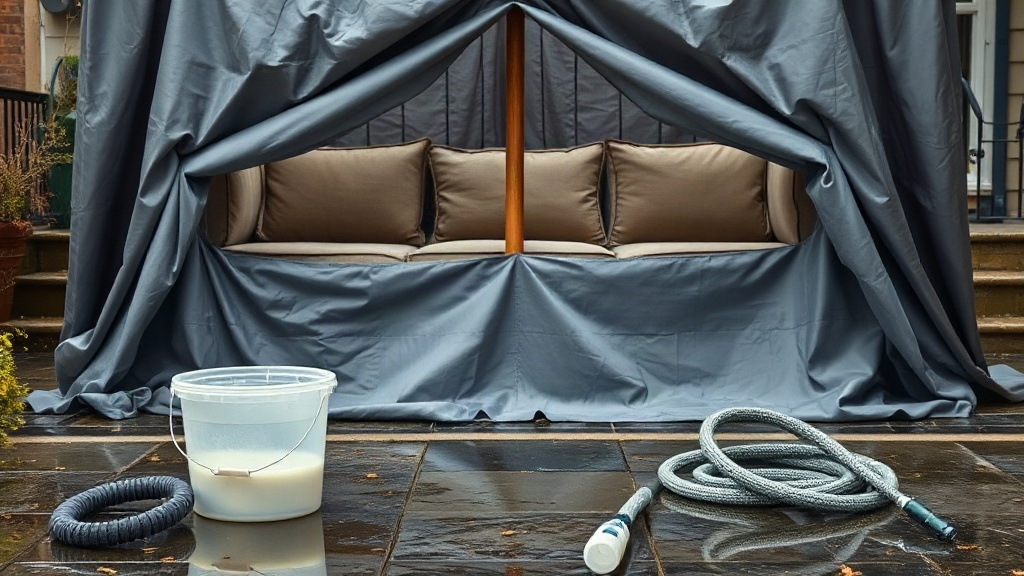
Walk into any garden centre in October and you’ll see it happen: someone buying the cheapest tarpaulin they can find, then dragging it over their set and cinching it tight around the legs. Good intentions. Wrong outcome.
Covering damp furniture or sealing it under a non-breathable cover creates what you’d get from wrapping a damp towel in cling film and leaving it in a warm room—it stays wet. In a UK autumn and winter, where mild, damp spells can drag on for weeks, that moisture never gets the chance to dry out. It condenses, drips back down onto the furniture, and works its way into weave joints, wood grain, and metal weld points.
The consequence isn’t dramatic—there’s no sudden collapse. It’s slower than that. Black mould creeping across rattan underlay. Orange rust spots blooming on metal table legs in January. A musty smell that doesn’t wash out. By spring, the set that was supposedly “protected” can look worse than one that was simply left in the open under a patio roof.
What covers do well is block weather from reaching the furniture in the first place—rain, sun, grime. What they can’t do is fix a problem that’s already started. Put one on wet furniture and you’re not preventing damage, you’re parcelling it up and leaving it to develop somewhere you can’t see it.
None of that makes covers a bad idea. It means the moisture has to be dealt with before the cover goes on, not after—because once it’s sealed in through a damp UK winter, it has nowhere left to go until you take the cover back off.
The “Tent” Method: How to Fit a Cover Without Trapping Moisture
The rule is simple: your cover should tent over the furniture, not wrap it. That means two things. First, the cover needs to be at least 20% larger than the furniture dimensions in every direction—wider, deeper, and taller. You’re creating an air gap all the way around, so air can circulate underneath rather than sitting against damp surfaces. Second, you need a central support to stop the cover sagging in the middle and turning into a water collector.
A large corner sofa set under a flat cover becomes a shallow bowl every time it rains. A 10-minute shower adds perhaps a few litres. A weekend of autumn drizzle can easily leave 20 litres or more sitting in that one dip—20kg-plus of dead weight in a single spot, enough to push a lightweight aluminium frame out of true or collapse a fabric canopy entirely. The solution is a cheap garden parasol pole, a piece of PVC pipe, or even a length of wooden dowel pushed into the centre of the set and left there under the cover. The cover drapes over it and the rain runs off the sides instead of pooling in the middle.
When fitting the cover, leave the sides loose—you want airflow under the edges, not a sealed environment. Most quality cover sizing charts give you a min and max dimension for a reason. Buy the larger size and use the cinch straps only loosely, enough to stop the wind taking it off, not tight enough to create a seal. The fabric doing the work is the bit above the furniture, not the bit squeezing against it.
What you’re aiming for is this: rain slides off the outside, air moves freely underneath, and any residual moisture from the furniture itself can escape into the atmosphere rather than condensing back down. That’s the tent principle, and it’s what outdoor gear manufacturers have used for decades for exactly this reason.
- Measure your furniture at its widest, deepest, and tallest points
- Buy a cover at least 20% larger on each dimension
- Support the centre of the cover with a pole or similar
- Leave side edges loose for airflow—don’t cinch tight
- Lift feet off the ground using pot feet or a wooden batten
- Clean and dry the furniture before covering—never cover wet
The honest reality is that a properly fitted cover adds meaningful protection against persistent UK rain without the moisture trap. It’s not complicated, but it does require buying the right size—which means measuring twice and resisting the cheapest option that just fits.
Now you know what to look for—Get the Free Garden Furniture Care Checklist to audit your current setup and decide whether a better-fitted cover is worth the upgrade.
When to Clean (Not Cover) Your Furniture
Covers are preventative. Cleaning is reactive. Sometimes reactive is the right call—particularly when rust has already started.
If you pull back the cover in November and find orange spots on metal legs or surface rust on a bolted joint, covering it back up won’t help. The rust will keep spreading under the fabric, and by spring you’ll have pitting where the protective coating has gone. At that point, the job is cleaning, not covering.
The simplest rust fix that actually works is white vinegar and salt. Apply white distilled vinegar directly to the rust spot, sprinkle a little salt over the top, and leave it for ten to fifteen minutes. The acetic acid in the vinegar dissolves the rust; the salt acts as a mild abrasive to help lift it. Scrub with a stiff brush, rinse clean, and dry thoroughly before treating with a protective oil or rust converter. Vinegar has natural antimicrobial properties too, tackling both the rust and any surface mould at the same time—a two-job fix that a cover simply can’t do.
For general grime and surface dirt, hot soapy water with a soft bristle brush does the job on wood, rattan, and metal alike. Green algae responds to the same approach—a garden hose or a pressure washer on a low setting will shift it off plastic and metal, while wood and rattan need the gentler soapy-water-and-brush route to avoid damaging the grain or weave. If algae has left a staining film rather than just a surface coating, that same white-vinegar mix from above works on it too: brush it on, leave for ten minutes, then scrub and rinse. Whatever method you use, rinse off with a garden hose and let it dry completely—a full day in dry weather, longer if the wood is dense—before reaching for the cover.
The sequence matters here: clean first, dry second, cover third. Skip the drying step and you’re just trapping the problem. This is the same basic logic behind the RHS’s own furniture-maintenance advice—that any care work on garden seating is done “at any time when the furniture is dry,” never before.
Material-Specific Winter Protection
Not all garden furniture needs the same approach. The protection strategy that works for teak will slowly destroy your plastic chairs if you apply it blindly.
📺 Watch: THE Secrets to Teak Oil: Preventing Common Outdoor Finishing mistakes. #furniturerestoration — Turners Fine Finishes♡
Wood (teak and hardwood): Covers are the right call, but wood must be completely dry before you put one on. Dense hardwoods like teak hold moisture for a surprisingly long time after rain—a wet weekend can mean three or four dry days before the surface is genuinely ready. Trap that moisture under a cover and you’ll get black spotting on the grain, particularly in the end-grain where water ingress is fastest. A breathable fabric cover helps, but the dry-first rule is non-negotiable.
Metal (steel, iron, wrought): Metal needs covering in the UK more than almost any other material—persistent rain is the primary driver of rust on unprotected steel. The cover must be breathable to avoid trapping condensation, which means avoiding the cheap plastic tarpaulins entirely. Check any existing rust before covering—a spot of surface rust under a cover will keep spreading. Treat it first.
Plastic and resin-weave: Here’s the honest answer most articles sidestep: plastic furniture can often be left outside all year without a cover, provided it’s clean and dry first. What covers do for plastic is prevent UV fading and stop algae colonising the surface—real benefits, but not critical ones if you’re not precious about the colour. If you do cover it, the tent method still applies. A tight cover on plastic in damp winter conditions is just as likely to trap moisture and grow algae on the surface itself.
Rattan and resin-weave: The weave is the weak point—not because the material is fragile, but because it’s the junction where water collects and mould starts. Dry the furniture thoroughly before covering, and use a breathable cover. If you’re covering a rattan sofa that sits on a patio with poor drainage, consider lifting it onto feet or battens to stop the base sitting in pooled water through winter.
So can anything be left out in the rain with nothing over it at all? For four of these five materials, no—wood, metal, and rattan all benefit from a properly fitted cover through a UK winter, and going without one just means persistent rain gets a longer run at the rot and rust described above. There’s one genuine exception, though.
The Cast Aluminium Exception
Here’s the situation where the usual rules flip entirely.
📺 Watch: How to renovate an aluminium table and chairs — Life in La Campagne
Cast aluminium furniture can be left outside all year round without a cover. It will not rust, rot, or warp—that’s the core material property that makes it genuinely weatherproof in a way that steel, wood, and rattan simply aren’t. You don’t need to treat it with oil, you don’t need to store it under cover, and you don’t need to worry about pooling water damaging the finish. The aluminium oxide layer that forms naturally on the surface is actually protective—it stops further corrosion at the source.
This means if you’ve bought a cast aluminium set, your winter protection job is essentially done. A quick clean in autumn if you want to keep it looking tidy, but otherwise—leave it out. No oiling, no dry-before-covering step, no cover to buy or store. If you’re weighing up new furniture and winter maintenance is the deciding factor, that’s the whole case for cast aluminium in one line: spend the cover budget on the pieces that actually need one.
Here’s the same five materials at a glance:
| Material | Protection Strategy | Key Consideration |
|---|---|---|
| Wood (Teak/Hardwood) | Cover is recommended | Must be completely dry before covering to prevent black spotting |
| Metal (Steel/Iron) | Cover is recommended | Use breathable covers to avoid trapping condensation and rust |
| Plastic & Resin-Weave | Often left uncovered | Covers prevent UV fading and algae but are not critical |
| Rattan & Resin-Weave | Cover is recommended | Dry thoroughly and use breathable covers to protect the weave junctions |
| Cast Aluminium | No cover needed | Naturally weatherproof and will not rust or warp |
Cover It, Clean It, or Leave It: The Short Version
Two rules carry almost all of this. The tent method—size the cover generously, support the middle, leave the edges loose—stops a cover from becoming the very thing that damages your furniture. And dry before covering, always, no exceptions, because a cover only ever locks in whatever state the furniture was already in.
Match the material to the rule and the rest follows. Wood, metal, and rattan all want a breathable, correctly sized cover once they’re genuinely dry. Cast aluminium wants none of that—leave it out and forget about it. And if rust or mould has already taken hold under an old cover, the order flips: clean it, dry it properly, and only then decide whether covering is still worth doing.
If you’re looking at your set right now wondering whether your current cover is doing more harm than good, the answer is probably yes if it’s tight-fitting, non-breathable, or went on while the furniture was still damp. Rather than guessing, Get the Free Garden Furniture Care Checklist to work through your setup systematically and know exactly what your furniture needs to get through winter in good shape.
Related Guides
For a complete overview, see our How to Winterise Garden Furniture in the UK.
Further reading: Royal Horticultural Society, Garden Organic, and Which? all publish general outdoor furniture care guidance worth cross-checking against your own set.