Which Oil for Outdoor Wooden Furniture: Teak vs Softwood vs Hardwood UK
Most people who buy “Teak Oil” for their outdoor furniture are buying the wrong product. It isn’t that the oil is bad—it’s actually very effective—but it is designed for teak, and most UK garden furniture isn’t made from teak. The result is exactly what you’d expect from a chemistry mismatch: a sticky, grubby surface that holds water rather than repelling it, leaving furniture in worse shape than before. The label says “Teak Oil,” so it’s easy to assume it works on any outdoor wood. It doesn’t. Once you understand why, the right choice becomes obvious.
Why “Teak Oil” is a Misleading Label
The name is the first problem. Teak Oil sounds like a generic product for outdoor wood, which is exactly how it is marketed. In reality, it is a specific formulation—typically a blend of tung oil, linseed oil, and thinners—designed to work with teak’s unusual chemistry.
Teak is one of the few outdoor woods that contains significant natural oils within its fibres. Those oils act as built-in weather resistance. Teak Oil works by sitting on top of the wood fibres, supplementing that natural oil layer rather than penetrating deep into the structure. It forms a surface seal that matches teak’s own chemistry.
Compare that to softwood—pine, fir, larch, the material most budget garden furniture is made from. Softwood is porous. When you apply Teak Oil to pine, the thinners soak into the wood quickly, but the actual oil fraction sits on the surface because there is no dense oily grain to hold it in place. You end up with a tacky film that never fully cures. Owners on DIY forums regularly report exactly this: Teak Oil applied to pine tables producing a sticky surface within weeks that attracts moss and grime rather than repelling them.
Hardwoods like acacia, eucalyptus, and iroko are the middle case. They are denser than softwood, and some of them carry a trace of natural oil that fades as the wood weathers — but nowhere near the volume locked into teak’s grain, and not enough for a surface sealer to hang on to. They need a penetrating oil that cures by polymerisation inside the wood fibres, not a surface sealer designed for oily grain. Teak Oil sits on top of these woods the same way it does on softwood, for the same reason: there is nothing substantial for it to bond with.
Boil it down to one line: surface sealers need an oily surface to bond with. Most garden furniture wood doesn’t have one.
Once you’ve got the chemistry, the rest follows on its own. Penetrating oil for softwoods and non-oily hardwoods; a surface sealer only for teak. If the label just says “Teak Oil,” that’s your signal you’re looking at the wrong tin.
For general maintenance guidance on all outdoor furniture types, see our piece on How to Clean Outdoor Furniture.
The Wood-Specific Verdict
Here is how the decision breaks down.
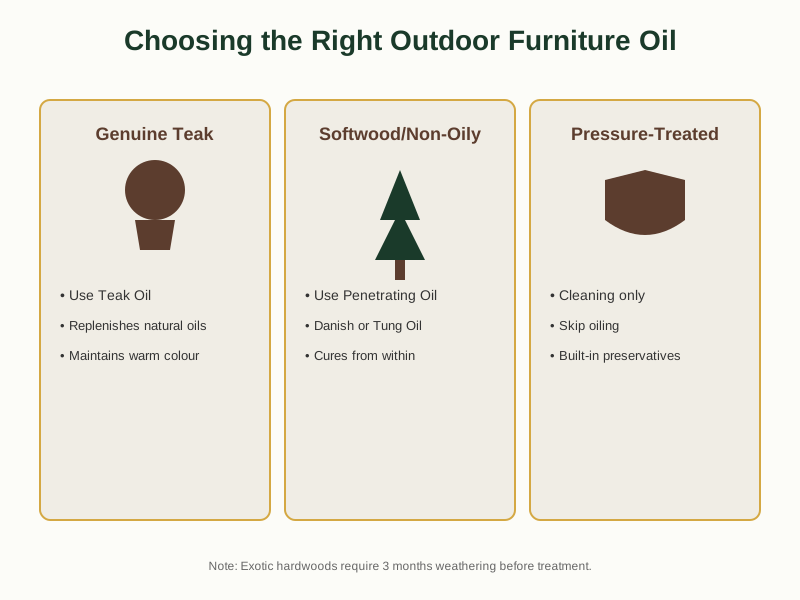
Teak furniture: Teak Oil is the correct choice. The product’s chemistry is designed for this wood’s natural oil content. It replenishes what the weather leaches out over time and maintains the warm colour most owners want to keep. If you have genuine teak—and only real teak, not “teak-effect” or rubberwood with a teak stain—this is what you reach for.
Softwood furniture (pine, fir, larch, cedar): Use a penetrating oil instead. Danish Oil or a dedicated softwood oil will soak into the grain and cure from within, giving you the protection you need without the sticky-surface problem. Teak Oil on pine is actively counterproductive; the number of owners who have had to sand it off and start again is the proof.
Hardwood furniture with only modest natural oils (acacia, eucalyptus, iroko): Same answer as softwood. These woods need a penetrating oil—Danish Oil or pure tung oil—that polymerises inside the fibres rather than sitting on the surface. Whatever oil they do carry naturally isn’t dense enough for Teak Oil to bond to.
Pressure-treated wood: This is the one situation where you can largely skip oiling. Pressure-impregnated timber has had preservative driven deep into the fibres during manufacture. It already has built-in protection against rot and insects. What it needs is cleaning, not oiling. Applying Teak Oil to pressure-treated pine won’t damage the wood, but it is money spent on a problem that doesn’t exist.
One important caveat: exotic hardwoods like massaranduba, bangkirai, and garapa—sometimes sold as premium garden decking—need a minimum of three months’ weathering before any oil treatment. The factory oils applied during milling need to leach out first, or the new oil simply cannot penetrate. This catches people out when they have paid for premium timber and the first coat goes sticky straight away.
The one habit worth breaking for good: never reach for Teak Oil on pine, acacia, eucalyptus, or anything that isn’t genuine teak. The sticky residue that follows isn’t just an appearance problem—it holds moisture against the wood, which is the opposite of what you’re trying to achieve.
The pattern holds across all of it: teak gets Teak Oil, everything else gets a penetrating oil. One product for one wood type; a different product for everything else. That is the right call for a UK garden that sees rain nine months of the year. Get the Free Garden Furniture Care Checklist to keep this decision tree handy.
For seasonal protection of any wood type, see our guide on How to Winterise Garden Furniture.
Wood type, oil, and the reason why:
| Wood Type | Recommended Oil | Why |
|---|---|---|
| Genuine Teak | Teak Oil | Designed for natural oil content; maintains colour |
| Softwood (Pine, Cedar) | Penetrating Oil (Danish Oil) | Prevents sticky surface buildup |
| Acacia, Eucalyptus, Iroko | Penetrating Oil (Danish Oil) | Not enough natural oil for a surface sealer to bond to |
| Pressure-Treated Wood | Cleaning Only | Built-in preservative protection |
| Exotic Hardwood (Massaranduba) | Wait 3 months, then Penetrating Oil | Factory oils must leach out first |
Top Picks for UK Weather
If you want one product that does the job reliably across most UK garden furniture, Osmo Garden Furniture Oil is the strongest all-rounder. It is microporous—meaning moisture can escape from inside the wood while water from outside is repelled—and UV-stable, so it doesn’t break down in summer sun like cheaper oils. This combination matters in the UK: a week of hot sun followed by three weeks of rain is enough to degrade an oil that isn’t UV-stable. Owners who use Osmo consistently report that it doesn’t go sticky on recoating, which is the complaint that comes up again and again with cheaper alternatives.
Standard Teak Oil products work fine on actual teak, but they lack the microporous structure that prevents surface buildup over multiple seasons. Every time you recoat, you add another layer. With Osmo, the microporous finish means each new coat bonds properly to the previous one rather than sitting on top.
Osmo Garden Furniture Oil costs noticeably more per tin than a budget teak oil of the same size. But you apply less per coat, it lasts longer between treatments, and you aren’t spending a weekend sanding off a failed sticky coat. If you are treating a set you use every summer, the maths still works out in its favour.
For softwood and non-oily hardwood specifically, a dedicated Danish Oil or pure tung oil is the right product. Liberon and Rustins both make versions that perform well. The trade-off is drying time: pure tung oil blends cure slower than Teak Oil, requiring dry weather for a day or two after application. In the UK, that window can be hard to find from May onwards.
The honest budget pick is Rustins Teak Oil, which works well on genuine teak at a lower price point. Owners consistently praise its low odour and natural finish. The catch is drying time: it is slower than most alternatives. For a sheltered patio set where you can control the conditions, it is a solid choice. For a table that lives in the open, the extra patience required makes Osmo worth its salt.
If you are buying a cover to protect your newly treated furniture over winter, a breathable one makes a significant difference—more on that in our review of Best Garden Furniture Covers.
Osmo vs. Standard Teak Oil — at a glance:
| Osmo Garden Furniture Oil | Standard Teak Oil | |
|---|---|---|
| Best for | All outdoor wood types | Teak only |
| UV stability | High | Moderate |
| Breathability / microporous | Yes | No |
| Recoat behaviour | Bonds properly | Can build up sticky |
| Cost per tin | Higher upfront | Lower upfront |
UK-Specific Application Tips
The UK climate is damp more often than it is dry, making timing your oiling critical. Apply oil to damp wood and you seal moisture inside—the exact opposite of what you want. Apply it in cold weather and the oil won’t cure properly. The window you are looking for is a dry, mild day in late spring or early summer, when the wood has dried out from winter but before summer heat speeds up weathering too much. The RHS advises treating garden furniture on a dry day and ensuring the wood is fully dry before any treatment; it is advice worth following.
📺 Watch: My Outdoor Furniture Oiling Nightmare — Charlie DIYte (CharlieDIYte)
The step most people skip is cleaning first. If your furniture has gone grey over winter, you need to restore the surface before you oil it, not oil over the grey. Specialist wood restorers like Osmo Wood Reviver cost a fair bit more than a bottle of decking cleaner, but they’re formulated to lift the weathered grey layer and bring the natural colour back. Washing-up liquid and a scrubbing brush will remove surface grime but won’t reverse the fibre breakdown that causes greying.
A mistake worth naming specifically: pressure washing. It feels satisfying, but it is wrong for outdoor wood. The high-pressure water roughens the wood fibres, opening up the grain so that oil absorption becomes uneven. Within a season, this shows as patchy discolouration. A soft brush and warm water, or a specialist wood cleaner, does the job without the damage.
The winter cover problem is one of the most common failures we see. A non-breathable cover traps moisture that the wood releases as it temperature-cycles through autumn and winter. The furniture starts the season wet and stays wet under the cover, which is exactly the condition that grows mildew. Country Living UK advises that breathable covers and airflow underneath are essential to prevent this.
The UK weather application checklist — before you open the tin:
- Clean the furniture first. Let it dry fully.
- Check the forecast. You need a dry day and temperatures above roughly 10°C.
- Make sure the wood is bone-dry—not just surface dry, but dry all the way through. If in doubt, wait another day.
- Apply thin coats. Thick coats don’t cure properly and stay sticky.
- Don’t cover it for at least 48 hours after the final coat, to allow full curing.
- When winterising: only cover if the cover is breathable, and check it periodically to make sure no water has pooled on top.
For tackling mould that has already established itself, see our guide on How to Remove Mould from Garden Furniture.
Frequently Asked Questions
Can I use Teak Oil on acacia furniture?
No. Acacia is a dense hardwood, but whatever natural oil it carries is nowhere near the volume locked into teak’s grain. Teak Oil won’t penetrate acacia properly; it will sit on the surface and go sticky, attracting grime and holding moisture. The right product for acacia, eucalyptus, and similar non-oily hardwoods is a penetrating oil like Danish Oil or pure tung oil, which cures from within the fibres.
What’s the difference between Teak Oil and Danish Oil?
Teak Oil is a surface sealer formulated to supplement teak’s natural oils. It sits on top of the wood. Danish Oil is a penetrating oil—a blend that soaks into the wood fibres and cures by polymerisation. Danish Oil works on porous woods because it has something to bond with inside the structure. Teak Oil doesn’t work on those woods because there is no oily surface for it to bond to.
How often should I oil garden furniture in the UK?
For teak, once a year is generally sufficient if you are maintaining the colour, typically in spring or early summer after a thorough clean. If you are happy for the teak to silver naturally, you can leave it untouched; the greying is cosmetic. Softwood and non-oily hardwood furniture will weather faster than teak and typically benefits from an annual oil treatment, particularly if it is in full sun. Check the furniture each spring: if water no longer beads on the surface, it is time to re-oil.
One Tin Per Wood Type
Go back to the label on the tin you’re holding. That’s the whole test.
📺 Watch: Four Years of Deck Cleaning and Oiling - What I've Learnt! — Charlie DIYte (CharlieDIYte)
Teak Oil works on teak and only on teak—the RHS treatment-timing advice above applies whichever oil you’re using, but the product itself has to match the wood. Pine, cedar, larch, acacia, eucalyptus, iroko: none of it is teak, so none of it wants Teak Oil. Reach for a penetrating oil instead—Danish Oil or pure tung oil. Osmo Garden Furniture Oil is the strongest all-round choice for most UK situations, with the microporous, UV-stable finish (see Osmo UK for the full range) that handles our unpredictable weather without going sticky, and a breathable cover from our covers guide—the same breathability principle Country Living UK points to for stopping trapped-moisture mould—protects the finish once it’s cured.
More garden furniture gets ruined in the UK by the wrong oil on the wrong wood than by weather, neglect, or bad luck combined. It’s a chemistry mismatch, not a technique failure. Match the tin to the timber and the rest of the job is straightforward.
Explore More Topics
Go deeper on specific topics:
- Furniture Cleaner vs Washing-Up Liquid: When Each Is Enough
- Rust Converter and Primer for Metal Garden Furniture UK
- Starter Care Kit for a New Patio Set: What to Buy First
- What to Skip for Garden Furniture Care: Sticky Oils, Harsh Bleach, Cheap Covers
Get the Free Garden Furniture Care Checklist to keep this decision tree somewhere you can find it.