What to Skip for Garden Furniture Care: Sticky Oils, Harsh Bleach, Cheap Covers
Most garden furniture advice is a shopping list: buy this oil, buy this cover, buy this cleaner. It rarely mentions what’s already sitting in your shed doing the damage. Three habits cause more UK garden furniture failure than any missing product ever could: cheap teak oil that never fully cures, bleach used on coloured finishes, and a cover that traps damp instead of blocking it. Each one has a specific mechanical cause — and once you see the mechanism, the fix is obvious.
Bleach Doesn’t Know the Difference Between Grime and Colour
Rattan, resin-weave and coloured plastic all rely on UV stabilisers and dyes to hold their finish. Bleach is a strong oxidiser, and oxidisers don’t discriminate — they strip whatever they touch, stabilisers included. Once those compounds are gone, the surface turns chalky and porous, and a porous surface collects grime faster than the clean one you started with.
This is a common failure pattern with bleached rattan: what looked like a stronger clean ends up more textured than before, and that texture is exactly what algae and moss need to get a foothold.
Bleach also accelerates corrosion on metal frames, eating into weld points and any scratch where the powder coating has already broken. Glass tabletops are different — bleach won’t touch the glass itself, but it can corrode the aluminium trim around the edges.
The safer approach for coloured rattan and plastic is warm soapy water and a soft sponge; for fabric cushions, a dedicated outdoor fabric cleaner does the job without touching the dye. B&Q’s own care guide is specific on this point for rattan — it warns against bleach because it causes cracking that then attracts more dirt, which is the same degradation loop this section describes, just reached by a different route.
If you’ve already used bleach, the damage is largely done. Re-oiling can help on wood, but on rattan or plastic the chalky finish tends to come back. The next move is a thorough rinse and a cleaner formulated for the actual material, not a stronger version of what caused the problem.
Why Your Teak Oil Keeps Turning Sticky
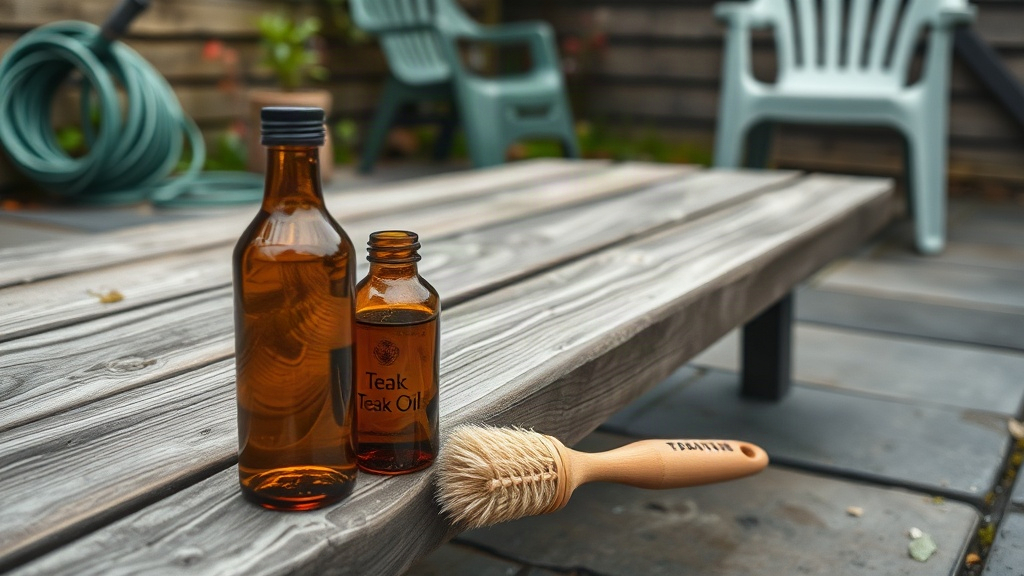
Most care guides just say “use a furniture oil” and leave it there. In UK weather specifically, that advice is incomplete: budget teak oil under about £15 a bottle tends to stay tacky through a damp UK season, while a proper Danish oil or tung oil blend — usually £20 and up — cures to a hard, non-sticky film that holds for well over a year.
The mechanism is straightforward. Cheap teak oils are typically built on low-grade linseed oil, which never fully polymerises in cool, damp British conditions. In UK humidity it just stays tacky, actively pulling in dirt and creating a grime magnet exactly where you wanted protection. Better oils use tung oil or polymerised linseed oil that cures to a hard film instead. The price difference is mostly the curing agent, not the branding.
Real buyer feedback backs this up for the better-known options. Ronseal’s Teak Oil gets recommended for coverage and finish, but reviewers regularly note it needs several coats and patience between them — it dries touch-dry quickly but takes longer to fully harden than the tin suggests. Rustins’ Teak Oil is well liked for low odour and a natural grain finish, though the same pattern shows up: buyers report doing a coat a day and still finding a tacky surface most of a week later. Budget oils at the bottom of the price bracket tend to show a stronger version of the same complaint — uneven or orange-tinted colour, more coats needed than expected, and a surface that stays sticky well past the stated drying time.
Budget oils save money upfront but fail in UK humidity, need more coats to look right, and leave a sticky surface within a single wet season. Quality oils cost more per bottle but cure properly, last considerably longer, and give a hard finish that doesn’t attract dirt. For a set you actually sit on, that trade-off favours the quality option. The one place we’d skip oiling altogether is a decorative teak set that’s rarely used, where the silvered, weathered look is arguably the better outcome anyway and oiling just adds maintenance for no real gain.
Now you know what to look for — Get the Free Garden Furniture Care Checklist to audit whether your current oil is in the sticky-risk category.
Cheap Covers Create the Damp They’re Supposed to Stop
Lift a cheap cover in March and the smell tells you everything: musty, damp, sometimes worse. Cheap covers are typically non-breathable polyethylene — the same material as a plastic bag. They block rain and UV well enough, but they also trap every bit of moisture the furniture releases through temperature swings and residual damp. That trapped moisture is exactly the condition mould and mildew need to get started.
The tell-tale signs show up fast: a musty smell on lifting the cover in spring, wet wood underneath despite no rain getting in, and scratches from the cover flapping in the wind. This is one of the most common complaints raised about budget covers — owners describe leaving a cover on a still-damp set and never quite shifting the smell afterwards.
The mechanism is simple: a cover without vents doesn’t breathe. Every material in your set — wood, metal, rattan — releases small amounts of moisture even when it looks dry. Seal that inside polyethylene and it condenses straight back onto the furniture. Over a wet UK winter, an unvented cover is functionally a damp cloth wrapped around your set.
The fix is a breathable, tight-fitting cover. Breathable fabric lets moisture vapour escape while still keeping liquid water out, and a tight fit matters because a loose cover flaps in the wind — that friction is what scratches painted and polished surfaces, metal finishes especially. The RHS’s own advice is to store garden furniture in a shed or garage over winter where space allows; it doesn’t spell out why, but the underlying logic is the same one driving this whole section — give moisture somewhere to go.
If you’re seeing two or more of the tell-tale signs above — musty smell, damp underneath, fresh scratches — the cover has stopped protecting the furniture and started attacking it.
When a Pressure Washer Does More Harm Than Good
A pressure washer strips algae and moss off stone and concrete in minutes. Point it at the wrong material, though, and the same force that shifts grime shifts the finish, the joints, or the glass itself.
High-pressure water can crack or shatter glass tabletops outright. It can also force water into joints, behind seals, and into wood grain — water that won’t fully evaporate before the furniture gets covered or stored, which sets up rot from the inside. On metal furniture, close-range pressure washing strips paint from powder-coated surfaces and exposes bare metal to rust. Retailer guidance on this is genuinely mixed — some allow low-pressure use on hardwood and metal, others rule it out for anything jointed or textured — which is exactly why the safer default is to keep concentrated jets off woven, glass, and unsealed surfaces altogether.
The honest answer: pressure washers suit stone patios, concrete, and heavily soiled metal frames with no fragile components. They don’t suit glass tabletops, rattan, unsealed wood, or anything with joins that could trap water.
If you do use one — and on a large stone terrace it’s a genuinely useful tool — keep the nozzle at least 30 centimetres back and use a wide fan spray rather than a pinpoint jet, on low pressure throughout. For everything else, a sponge, warm soapy water, and a soft brush does the job without the risk.
How to Actually Winterise Garden Furniture in the UK
Furniture that fails over winter usually isn’t a weather problem — it’s a sequencing problem. It gets covered while still damp, stored in a sealed shed with no airflow, or treated with the wrong product, and ends up holding moisture instead of shedding it.
The three-step routine is clean, dry, protect — in that order, and skipping the drying step is what undoes the other two.
First, clean all surfaces with warm soapy water and let the furniture dry completely in open air — not direct sun, which dries unevenly, but a sheltered spot with good airflow for 24–48 hours. Second, apply any oil or protector once the wood is genuinely dry; oiling damp wood just seals the moisture in rather than keeping it out. Third, cover with a breathable, tight-fitting cover only once everything is properly dry, or store it in a dry, ventilated space instead.
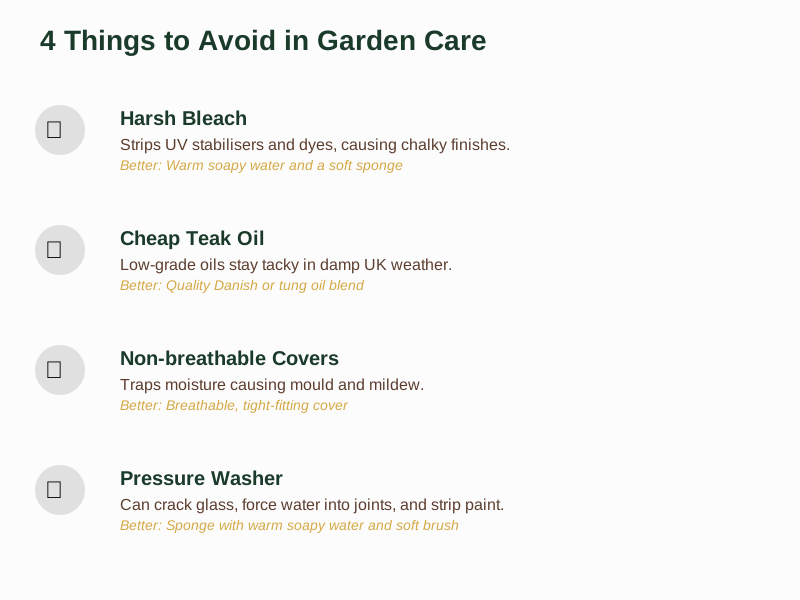
Here’s the quick-reference version, if the routine above is more than you need right now:
| Item | Why to Skip | Better Alternative |
|---|---|---|
| Harsh Bleach | Strips UV stabilisers and dyes, causing chalky finishes | Warm soapy water and a soft sponge |
| Cheap Teak Oil | Low-grade linseed oil stays tacky in damp UK weather | Quality Danish or tung oil blend |
| Non-breathable Covers | Traps moisture causing mould and mildew | Breathable, tight-fitting cover |
| Pressure Washer | Can crack glass, force water into joints, and strip paint | Sponge with warm soapy water and soft brush |
If you take nothing else from this article: the three things worth skipping — bleach, cheap oil, cheap covers — all fail through the same shape of mistake. They add a problem rather than solving one. Bleach strips the finish. Cheap oil leaves a surface that attracts grime. A cheap cover traps the damp that grows mould. Skip all three, and the sequence above — clean, dry, protect — does the actual work.
Frequently Asked Questions
Can I use bleach on my white plastic garden furniture?
No—bleach will yellow the plastic and make it brittle over time, even on white furniture. The oxidising action breaks down the polymer structure, which causes the yellowing. Warm soapy water or a dedicated plastic garden furniture cleaner does the job without the risk.
Why does my teak furniture turn black in the winter?
That’s mould or algae growth, caused by damp conditions being trapped against the surface—most commonly under a cover that isn’t breathable. Clean it with warm soapy water, allow it to dry fully, and treat it with a quality teak oil once dry. If the blackening is on an unoiled set, it’s cosmetic rather than structural—the wood underneath is fine once you clean it.
Do I need to oil my teak furniture every year?
That depends on the look you want. If you want to maintain the golden honey colour, yes—typically once in spring or early summer after a thorough clean and dry. If you’re happy with the silver-grey weathered patina that teak develops naturally, you can skip oiling entirely. The silvering is cosmetic, not structural—the wood stays sound.
What Cheap Actually Costs You
Three things are worth skipping on UK garden furniture: bleach on coloured finishes, cheap teak oil that never fully cures, and covers that trap damp instead of letting it breathe. In every case the “cheap” option isn’t actually cheaper — it just moves the cost from the price tag to a respray, a re-oil, or a replaced cushion set down the line.
If you’re looking at a sticky grime layer on your teak set or a musty smell under the cover, work out first whether the product or the cover is the actual problem. It’s often both at once.
The Free Garden Furniture Care Checklist walks you through a season-by-season audit of what you should be doing—and what to stop doing. It’s the tool that turns “I think I should oil it” into a clear, confident routine. Get the Free Garden Furniture Care Checklist
Related Guides
For a complete overview, see our Which Oil for Outdoor Wooden Furniture: Teak vs Softwood vs Hardwood UK.
For general reference, the RHS covers winter storage and the B&Q care guide covers material-specific cleaning — both are worth checking against your own set, since the right answer varies enough by material and finish that no single article, including this one, covers every case.